Nampa News Photos

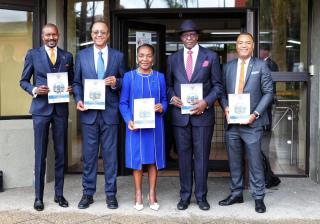
WINDHOEK, 05 February 2026 - President Netumbo Nandi-Ndaitwah pictured with Chief Justice Peter Shivute and judicial officers. (Photo by: Eba Kandovazu) NAMPA
NAMPA
WINDHOEK, 04 February 2026 - Minister of Industries, Mines and Energy, Modestus Amutse. (Photo by: Andreas Thomas) NAMPA
NAMPA
KATIMA MULILO, 05 February 2026 - Katima Mulilo Police Station Commander, Chief Inspector Charles Mayumbelo pictured during a media conference on Thursday. (Photo: Michael Mutonga Liswaniso) NAMPA
NAMPA
KATIMA MULILO, 05 February 2026 - Katima Mulilo Police Station Commander, Chief Inspector Charles Mayumbelo pictured during a media conference on Thursday. (Photo: Michael Mutonga Liswaniso) NAMPA
NAMPA
SWAKOPMUND, 04 February 2026 - The head coach of Libya's senior national futsal team, Abdulbasit Alnaas, relays instructions to his players during their match against Namibia in the 2026 Morocco CAF Futsal AFCON qualifiers at The Dome in Swakopmund. Namibia lost the match 3-11. (Photo by: Hesron Kapanga) NAMPA
NAMPA
SWAKOPMUND, 04 February 2026 - The head coach of Libya's senior national futsal team, Abdulbasit Alnaas, relays instructions to his players during their match against Namibia in the 2026 Morocco CAF Futsal AFCON qualifiers at The Dome in Swakopmund. Namibia lost the match 3-11. (Photo by: Hesron Kapanga) NAMPA
NAMPA
SWAKOPMUND, 04 February 2026 - The head coach of Namibia's senior men’s futsal team, Marcos Antunes (right) and George Haikali pictured during the Brave Fives match against Libya in the 2026 CAF Futsal AFCON qualifiers at The Dome in Swakopmund. Namibia lost the match 3-11 in the first leg of their round two CAF qualifiers. (Photo by: Hesron Kapanga) NAMPA
NAMPA
SWAKOPMUND, 04 February 2026 - The head coach of Namibia's senior men's futsal team, Marcos Antunes, relays instructions to the players during their match against Libya in the 2026 CAF Futsal AFCON qualifiers at The Dome in Swakopmund on Wednesday. (Photo by: Hesron Kapanga) NAMPA
NAMPA
Comprehensive Compelling Credible Content
#14
Namibian Regions
#23
Journalists
#16
SADC Countries
#123 000
Monthly Website Users
Top News Site
In Southern Africa
#10
Partner Agencies Across the globe

International News Photos

(260206) -- DUNHUANG, Feb. 6, 2026 (Xinhua) -- Staff members of the Yumenguan Conservation Station Sun Hailong (L) and Xiao Yonggang observe Przewalski's horses through binoculars at the Dunhuang West Lake National Nature Reserve in Dunhuang, northwest China's Gansu Province, Feb. 5, 2026.
  The Przewalski's horse, a globally endangered species under first-class national protection in China, was once extinct in the wild within the country. In 1985, China launched a reintroduction program, bringing the horses back from abroad for breeding. Within the 660,000-hectare Dunhuang West Lake National Nature Reserve, a conservation team works year-round as guardians of the Przewalski's horses. 
  Staff members conduct regular monitoring of the horses. They document foraging, drinking and population structure, while also patrolling the area and checking surrounding water resources. Additionally, they examine feces to assess the condition of the horses. After 40 years of reintroduction and conservation, the Przewalski's horse population in this reserve has grown to approximately 200, successfully transitioning from captive to natural breeding. 
  "Watching the horses running over the desert and grasslands makes our efforts worthwhile," said Wu Xingdong, head of the Yumenguan Conservation Station at the West Lake Reserve. (Xinhua/Chen Bin)
NAMPA / Xinhua
(260206) -- DUNHUANG, Feb. 6, 2026 (Xinhua) -- Head of the Yumenguan Conservation Station Wu Xingdong (R) and his colleague Wang Chenghai check and note the freezing condition of water resources at the Dunhuang West Lake National Nature Reserve in Dunhuang, northwest China's Gansu Province, Feb. 5, 2026.
  The Przewalski's horse, a globally endangered species under first-class national protection in China, was once extinct in the wild within the country. In 1985, China launched a reintroduction program, bringing the horses back from abroad for breeding. Within the 660,000-hectare Dunhuang West Lake National Nature Reserve, a conservation team works year-round as guardians of the Przewalski's horses. 
  Staff members conduct regular monitoring of the horses. They document foraging, drinking and population structure, while also patrolling the area and checking surrounding water resources. Additionally, they examine feces to assess the condition of the horses. After 40 years of reintroduction and conservation, the Przewalski's horse population in this reserve has grown to approximately 200, successfully transitioning from captive to natural breeding. 
  "Watching the horses running over the desert and grasslands makes our efforts worthwhile," said Wu Xingdong, head of the Yumenguan Conservation Station at the West Lake Reserve. (Xinhua/Lang Bingbing)
NAMPA / Xinhua
(260206) -- DUNHUANG, Feb. 6, 2026 (Xinhua) -- This photo taken on Feb. 5, 2026 shows Przewalski's horses foraging for food at the Dunhuang West Lake National Nature Reserve in Dunhuang, northwest China's Gansu Province.
  The Przewalski's horse, a globally endangered species under first-class national protection in China, was once extinct in the wild within the country. In 1985, China launched a reintroduction program, bringing the horses back from abroad for breeding. Within the 660,000-hectare Dunhuang West Lake National Nature Reserve, a conservation team works year-round as guardians of the Przewalski's horses. 
  Staff members conduct regular monitoring of the horses. They document foraging, drinking and population structure, while also patrolling the area and checking surrounding water resources. Additionally, they examine feces to assess the condition of the horses. After 40 years of reintroduction and conservation, the Przewalski's horse population in this reserve has grown to approximately 200, successfully transitioning from captive to natural breeding. 
  "Watching the horses running over the desert and grasslands makes our efforts worthwhile," said Wu Xingdong, head of the Yumenguan Conservation Station at the West Lake Reserve. (Xinhua/Chen Bin)
NAMPA / Xinhua
(260206) -- DUNHUANG, Feb. 6, 2026 (Xinhua) -- This photo taken on Feb. 5, 2026 shows a Przewalski's horse foraging for food at the Dunhuang West Lake National Nature Reserve in Dunhuang, northwest China's Gansu Province.
  The Przewalski's horse, a globally endangered species under first-class national protection in China, was once extinct in the wild within the country. In 1985, China launched a reintroduction program, bringing the horses back from abroad for breeding. Within the 660,000-hectare Dunhuang West Lake National Nature Reserve, a conservation team works year-round as guardians of the Przewalski's horses. 
  Staff members conduct regular monitoring of the horses. They document foraging, drinking and population structure, while also patrolling the area and checking surrounding water resources. Additionally, they examine feces to assess the condition of the horses. After 40 years of reintroduction and conservation, the Przewalski's horse population in this reserve has grown to approximately 200, successfully transitioning from captive to natural breeding. 
  "Watching the horses running over the desert and grasslands makes our efforts worthwhile," said Wu Xingdong, head of the Yumenguan Conservation Station at the West Lake Reserve. (Xinhua/Lang Bingbing)
NAMPA / Xinhua
(260206) -- DUNHUANG, Feb. 6, 2026 (Xinhua) -- Head of the Yumenguan Conservation Station Wu Xingdong (R) and his colleague Sun Hailong patrol at the Dunhuang West Lake National Nature Reserve in Dunhuang, northwest China's Gansu Province, Feb. 5, 2026.
  The Przewalski's horse, a globally endangered species under first-class national protection in China, was once extinct in the wild within the country. In 1985, China launched a reintroduction program, bringing the horses back from abroad for breeding. Within the 660,000-hectare Dunhuang West Lake National Nature Reserve, a conservation team works year-round as guardians of the Przewalski's horses. 
  Staff members conduct regular monitoring of the horses. They document foraging, drinking and population structure, while also patrolling the area and checking surrounding water resources. Additionally, they examine feces to assess the condition of the horses. After 40 years of reintroduction and conservation, the Przewalski's horse population in this reserve has grown to approximately 200, successfully transitioning from captive to natural breeding. 
  "Watching the horses running over the desert and grasslands makes our efforts worthwhile," said Wu Xingdong, head of the Yumenguan Conservation Station at the West Lake Reserve. (Xinhua/Chen Bin)
NAMPA / Xinhua
(260206) -- DUNHUANG, Feb. 6, 2026 (Xinhua) -- Head of the Yumenguan Conservation Station Wu Xingdong (L) and his colleague Sun Hailong patrol at the Dunhuang West Lake National Nature Reserve in Dunhuang, northwest China's Gansu Province, Feb. 5, 2026.
  The Przewalski's horse, a globally endangered species under first-class national protection in China, was once extinct in the wild within the country. In 1985, China launched a reintroduction program, bringing the horses back from abroad for breeding. Within the 660,000-hectare Dunhuang West Lake National Nature Reserve, a conservation team works year-round as guardians of the Przewalski's horses. 
  Staff members conduct regular monitoring of the horses. They document foraging, drinking and population structure, while also patrolling the area and checking surrounding water resources. Additionally, they examine feces to assess the condition of the horses. After 40 years of reintroduction and conservation, the Przewalski's horse population in this reserve has grown to approximately 200, successfully transitioning from captive to natural breeding. 
  "Watching the horses running over the desert and grasslands makes our efforts worthwhile," said Wu Xingdong, head of the Yumenguan Conservation Station at the West Lake Reserve. (Xinhua/Chen Bin)
NAMPA / Xinhua
(260206) -- DUNHUANG, Feb. 6, 2026 (Xinhua) -- Staff member of the Yumenguan Conservation Station Sun Hailong (R) observes Przewalski's horses through binoculars at the Dunhuang West Lake National Nature Reserve in Dunhuang, northwest China's Gansu Province, Feb. 5, 2026.
  The Przewalski's horse, a globally endangered species under first-class national protection in China, was once extinct in the wild within the country. In 1985, China launched a reintroduction program, bringing the horses back from abroad for breeding. Within the 660,000-hectare Dunhuang West Lake National Nature Reserve, a conservation team works year-round as guardians of the Przewalski's horses. 
  Staff members conduct regular monitoring of the horses. They document foraging, drinking and population structure, while also patrolling the area and checking surrounding water resources. Additionally, they examine feces to assess the condition of the horses. After 40 years of reintroduction and conservation, the Przewalski's horse population in this reserve has grown to approximately 200, successfully transitioning from captive to natural breeding. 
  "Watching the horses running over the desert and grasslands makes our efforts worthwhile," said Wu Xingdong, head of the Yumenguan Conservation Station at the West Lake Reserve. (Xinhua/Chen Bin)
NAMPA / Xinhua
(260206) -- DUNHUANG, Feb. 6, 2026 (Xinhua) -- Head of the Yumenguan Conservation Station Wu Xingdong (2nd L) and his colleagues observe the activity of Przewalski's horses at the Dunhuang West Lake National Nature Reserve in Dunhuang, northwest China's Gansu Province, Feb. 5, 2026.
  The Przewalski's horse, a globally endangered species under first-class national protection in China, was once extinct in the wild within the country. In 1985, China launched a reintroduction program, bringing the horses back from abroad for breeding. Within the 660,000-hectare Dunhuang West Lake National Nature Reserve, a conservation team works year-round as guardians of the Przewalski's horses. 
  Staff members conduct regular monitoring of the horses. They document foraging, drinking and population structure, while also patrolling the area and checking surrounding water resources. Additionally, they examine feces to assess the condition of the horses. After 40 years of reintroduction and conservation, the Przewalski's horse population in this reserve has grown to approximately 200, successfully transitioning from captive to natural breeding. 
  "Watching the horses running over the desert and grasslands makes our efforts worthwhile," said Wu Xingdong, head of the Yumenguan Conservation Station at the West Lake Reserve. (Xinhua/Chen Bin)
NAMPA / Xinhua