Nampa News Photos

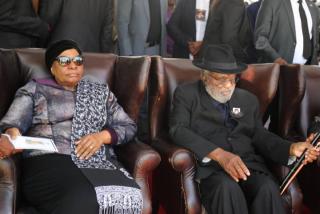
WINDHOEK, 20 MAY 2026 - Professor Haihambo Ya-Otto from the University of Namibia was a key attendee at the graduation ceremony for the Tentative Certificate in Basic Pre-Vocational Skills, held in Windhoek on Wednesday. (Photo by: Uakutura Kambaekua) NAMPA.

WINDHOEK, 20 MAY 2026 - Professor Haihambo Ya-Otto from the University of Namibia was a key attendee at the graduation ceremony for the Tentative Certificate in Basic Pre-Vocational Skills, held in Windhoek on Wednesday. (Photo by: Uakutura Kambaekua) NAMPA.

NAMPA
WINDHOEK, 20 MAY 2026 - Helena Angula graduated with a certificate in Food Preparation in Windhoek on Wednesday, overcoming significant challenges as a student with special needs. (Photo by: Uakutura Kambaekua) NAMPA.

WINDHOEK, 20 MAY 2026 - Helena Angula graduated with a certificate in Food Preparation in Windhoek on Wednesday, overcoming significant challenges as a student with special needs. (Photo by: Uakutura Kambaekua) NAMPA.

NAMPA
WINDHOEK, 20 MAY 2026 - Otja Uandara graduated with a certificate in Early Childhood Development from Eros Girls’ School in Windhoek, overcoming significant challenges as a student with special needs. (Photo by: Uakutura Kambaekua) NAMPA.

WINDHOEK, 20 MAY 2026 - Otja Uandara graduated with a certificate in Early Childhood Development from Eros Girls’ School in Windhoek, overcoming significant challenges as a student with special needs. (Photo by: Uakutura Kambaekua) NAMPA.

NAMPA
RUNDU, 19 May 2026 - An Angolan national, Felix Pratha (28), made his first appearance in the Rundu Magistrate’s Court on charges of possessing rough, uncut diamonds and violating Section 12(1) of the Immigration Control Act. (Photo: Contributed)

RUNDU, 19 May 2026 - An Angolan national, Felix Pratha (28), made his first appearance in the Rundu Magistrate’s Court on charges of possessing rough, uncut diamonds and violating Section 12(1) of the Immigration Control Act. (Photo: Contributed)

NAMPA
VHUNGU VHUNGU, 19 May 2026- Vhungu Vhungu green scheme farm manager Floris Smith. (Photo by: Sawi Hausiku) NAMPA

VHUNGU VHUNGU, 19 May 2026- Vhungu Vhungu green scheme farm manager Floris Smith. (Photo by: Sawi Hausiku) NAMPA

NAMPA
WINDHOEK, 19 May 2026 - Namibia Revenue Agency (NamRA) Commissioner, Sam Shivute. (Photo: Contributed)

WINDHOEK, 19 May 2026 - Namibia Revenue Agency (NamRA) Commissioner, Sam Shivute. (Photo: Contributed)

NAMPA
SWAKOPMUND, 19 MAY 2026 - Speaker of the National Assembly Saara Kuugongelwa-Amadhila speaking during her visit to the Ruach Elohim Foundation at Swakopmund. (Photo by: Isabel Bento) NAMPA

SWAKOPMUND, 19 MAY 2026 - Speaker of the National Assembly Saara Kuugongelwa-Amadhila speaking during her visit to the Ruach Elohim Foundation at Swakopmund. (Photo by: Isabel Bento) NAMPA

NAMPA
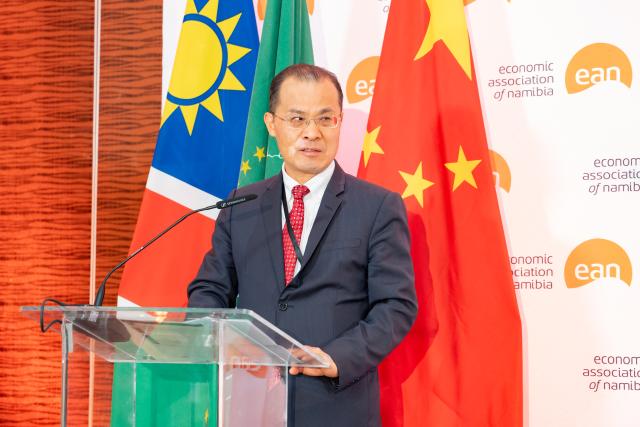
WINDHOEK, 18 MAY 2026 - Bank Windhoek's Managing Director, James Chapman. (Photo: Contributed)

WINDHOEK, 18 MAY 2026 - Bank Windhoek's Managing Director, James Chapman. (Photo: Contributed)

NAMPA
Comprehensive Compelling Credible Content
#14
Namibian Regions
#23
Journalists
#16
SADC Countries
#123 000
Monthly Website Users
Top News Site
In Southern Africa
#10
Partner Agencies Across the globe

International News Photos

A flock of sheep belonging to a Palestinian farmer grazes near the village of Nasariya in the occupied West Bank on May 20, 2026, ahead of Eid al-Adha, the Muslim Feast of Sacrifice. Eid al-Adha marks the end of the Hajj pilgrimage to Mecca and commemorates the Prophet Abraham’s willingness to sacrifice his son as an act of obedience to Allah, with the ritual centred on the slaughter of livestock. For Palestinian farmers in the occupied West Bank, the pastoral tradition linked to the festival is increasingly constrained as grazing areas have significantly shrunk amid the expansion of Israeli settlements. Many now rely more heavily on purchased fodder to feed their animals year-round, while also stepping up farm security amid rising reports of livestock theft. (Photo by JOHN WESSELS / AFP)

A flock of sheep belonging to a Palestinian farmer grazes near the village of Nasariya in the occupied West Bank on May 20, 2026, ahead of Eid al-Adha, the Muslim Feast of Sacrifice. Eid al-Adha marks the end of the Hajj pilgrimage to Mecca and commemorates the Prophet Abraham’s willingness to sacrifice his son as an act of obedience to Allah, with the ritual centred on the slaughter of livestock. For Palestinian farmers in the occupied West Bank, the pastoral tradition linked to the festival is increasingly constrained as grazing areas have significantly shrunk amid the expansion of Israeli settlements. Many now rely more heavily on purchased fodder to feed their animals year-round, while also stepping up farm security amid rising reports of livestock theft. (Photo by JOHN WESSELS / AFP)

NAMPA / AFP
A young Palestinian farmer holds the door of a truck carrying sheep for a buyer at a farm in the village of Nasariya in the occupied West Bank on May 20, 2026, ahead of Eid al-Adha, the Muslim Feast of Sacrifice. Eid al-Adha marks the end of the Hajj pilgrimage to Mecca and commemorates the Prophet Abraham’s willingness to sacrifice his son as an act of obedience to Allah, with the ritual centred on the slaughter of livestock. For Palestinian farmers in the occupied West Bank, the pastoral tradition linked to the festival is increasingly constrained as grazing areas have significantly shrunk amid the expansion of Israeli settlements. Many now rely more heavily on purchased fodder to feed their animals year-round, while also stepping up farm security amid rising reports of livestock theft. (Photo by JOHN WESSELS / AFP)

A young Palestinian farmer holds the door of a truck carrying sheep for a buyer at a farm in the village of Nasariya in the occupied West Bank on May 20, 2026, ahead of Eid al-Adha, the Muslim Feast of Sacrifice. Eid al-Adha marks the end of the Hajj pilgrimage to Mecca and commemorates the Prophet Abraham’s willingness to sacrifice his son as an act of obedience to Allah, with the ritual centred on the slaughter of livestock. For Palestinian farmers in the occupied West Bank, the pastoral tradition linked to the festival is increasingly constrained as grazing areas have significantly shrunk amid the expansion of Israeli settlements. Many now rely more heavily on purchased fodder to feed their animals year-round, while also stepping up farm security amid rising reports of livestock theft. (Photo by JOHN WESSELS / AFP)

NAMPA / AFP
A Palestinian farmer leads a donkey as he guides a flock of sheep out to graze near the village of Nasariya in the occupied West Bank on May 20, 2026, ahead of Eid al-Adha, the Muslim Feast of Sacrifice. Eid al-Adha marks the end of the Hajj pilgrimage to Mecca and commemorates the Prophet Abraham’s willingness to sacrifice his son as an act of obedience to Allah, with the ritual centred on the slaughter of livestock. For Palestinian farmers in the occupied West Bank, the pastoral tradition linked to the festival is increasingly constrained as grazing areas have significantly shrunk amid the expansion of Israeli settlements. Many now rely more heavily on purchased fodder to feed their animals year-round, while also stepping up farm security amid rising reports of livestock theft. (Photo by JOHN WESSELS / AFP)

A Palestinian farmer leads a donkey as he guides a flock of sheep out to graze near the village of Nasariya in the occupied West Bank on May 20, 2026, ahead of Eid al-Adha, the Muslim Feast of Sacrifice. Eid al-Adha marks the end of the Hajj pilgrimage to Mecca and commemorates the Prophet Abraham’s willingness to sacrifice his son as an act of obedience to Allah, with the ritual centred on the slaughter of livestock. For Palestinian farmers in the occupied West Bank, the pastoral tradition linked to the festival is increasingly constrained as grazing areas have significantly shrunk amid the expansion of Israeli settlements. Many now rely more heavily on purchased fodder to feed their animals year-round, while also stepping up farm security amid rising reports of livestock theft. (Photo by JOHN WESSELS / AFP)

NAMPA / AFP
A Palestinian farmer stands in a sheep pen at a farm in the village of Nasariya in the occupied West Bank on May 20, 2026, ahead of Eid al-Adha, the Muslim Feast of Sacrifice. Eid al-Adha marks the end of the Hajj pilgrimage to Mecca and commemorates the Prophet Abraham’s willingness to sacrifice his son as an act of obedience to Allah, with the ritual centred on the slaughter of livestock. For Palestinian farmers in the occupied West Bank, the pastoral tradition linked to the festival is increasingly constrained as grazing areas have significantly shrunk amid the expansion of Israeli settlements. Many now rely more heavily on purchased fodder to feed their animals year-round, while also stepping up farm security amid rising reports of livestock theft. (Photo by JOHN WESSELS / AFP)

A Palestinian farmer stands in a sheep pen at a farm in the village of Nasariya in the occupied West Bank on May 20, 2026, ahead of Eid al-Adha, the Muslim Feast of Sacrifice. Eid al-Adha marks the end of the Hajj pilgrimage to Mecca and commemorates the Prophet Abraham’s willingness to sacrifice his son as an act of obedience to Allah, with the ritual centred on the slaughter of livestock. For Palestinian farmers in the occupied West Bank, the pastoral tradition linked to the festival is increasingly constrained as grazing areas have significantly shrunk amid the expansion of Israeli settlements. Many now rely more heavily on purchased fodder to feed their animals year-round, while also stepping up farm security amid rising reports of livestock theft. (Photo by JOHN WESSELS / AFP)

NAMPA / AFP
A Palestinian farmer rides a donkey as he guides a flock of sheep out to graze near the village of Nasariya in the occupied West Bank on May 20, 2026, ahead of Eid al-Adha, the Muslim Feast of Sacrifice. Eid al-Adha marks the end of the Hajj pilgrimage to Mecca and commemorates the Prophet Abraham’s willingness to sacrifice his son as an act of obedience to Allah, with the ritual centred on the slaughter of livestock. For Palestinian farmers in the occupied West Bank, the pastoral tradition linked to the festival is increasingly constrained as grazing areas have significantly shrunk amid the expansion of Israeli settlements. Many now rely more heavily on purchased fodder to feed their animals year-round, while also stepping up farm security amid rising reports of livestock theft. (Photo by JOHN WESSELS / AFP)

A Palestinian farmer rides a donkey as he guides a flock of sheep out to graze near the village of Nasariya in the occupied West Bank on May 20, 2026, ahead of Eid al-Adha, the Muslim Feast of Sacrifice. Eid al-Adha marks the end of the Hajj pilgrimage to Mecca and commemorates the Prophet Abraham’s willingness to sacrifice his son as an act of obedience to Allah, with the ritual centred on the slaughter of livestock. For Palestinian farmers in the occupied West Bank, the pastoral tradition linked to the festival is increasingly constrained as grazing areas have significantly shrunk amid the expansion of Israeli settlements. Many now rely more heavily on purchased fodder to feed their animals year-round, while also stepping up farm security amid rising reports of livestock theft. (Photo by JOHN WESSELS / AFP)

NAMPA / AFP
21 May 2026, Hamburg: Fountain water tinted green by climate activists flows in the Planten un Blomen park in Hamburg, next to the spray-painted slogan "Unfortunately not green". Activists from the Extinction Rebellion (XR) group claimed responsibility for the stunt, stating they used a harmless organic dye called uranine to protest against Germany's liquefied natural gas (LNG) policies. Photo: Bodo Marks/dpa

21 May 2026, Hamburg: Fountain water tinted green by climate activists flows in the Planten un Blomen park in Hamburg, next to the spray-painted slogan "Unfortunately not green". Activists from the Extinction Rebellion (XR) group claimed responsibility for the stunt, stating they used a harmless organic dye called uranine to protest against Germany's liquefied natural gas (LNG) policies. Photo: Bodo Marks/dpa

NAMPA / DPA
21 May 2026, Hamburg: Fountain water tinted green by climate activists flows in the Planten un Blomen park in Hamburg, next to the spray-painted slogan "Unfortunately not green". Activists from the Extinction Rebellion (XR) group claimed responsibility for the stunt, stating they used a harmless organic dye called uranine to protest against Germany's liquefied natural gas (LNG) policies. Photo: Bodo Marks/dpa

21 May 2026, Hamburg: Fountain water tinted green by climate activists flows in the Planten un Blomen park in Hamburg, next to the spray-painted slogan "Unfortunately not green". Activists from the Extinction Rebellion (XR) group claimed responsibility for the stunt, stating they used a harmless organic dye called uranine to protest against Germany's liquefied natural gas (LNG) policies. Photo: Bodo Marks/dpa

NAMPA / DPA
21 May 2026, Hamburg: "Clean Gas = Dirty Lie" is spray-painted on the pavement in front of an empty fountain basin on Theaterplatz outside the Semperoper in Dresden. Activists from the Extinction Rebellion environmental movement dyed fountains green across numerous German cities to protest against the federal government's liquefied natural gas (LNG) and economic policies. Photo: Bodo Marks/dpa

21 May 2026, Hamburg: "Clean Gas = Dirty Lie" is spray-painted on the pavement in front of an empty fountain basin on Theaterplatz outside the Semperoper in Dresden. Activists from the Extinction Rebellion environmental movement dyed fountains green across numerous German cities to protest against the federal government's liquefied natural gas (LNG) and economic policies. Photo: Bodo Marks/dpa

NAMPA / DPA