Nampa News Photos

OMPINGE, 03 May 2026- Community members from Ompinge village in the Onyaanya constituency of the Oshikoto region watching a film screening titled 'Namibia: The Struggle for Liberation,' ahead of the Cassinga Day commemorations. Those commemorations are set to take place at Okapalelona settlement in the Omusati region on Monday. (Photo: contributed)
NAMPA
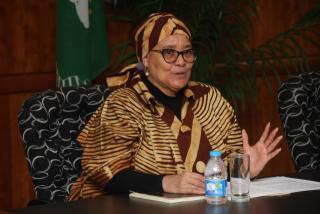
OPUWO, 02 MAY 2026- Deputy Minister of Agriculture, Fisheries, Water and Land Reform Ruthy Masake during the Opuwo Annual Trade Fair Agricultural Show at Opuwo, in the Kunene region. (Photo: Kaviveterue Virere) NAMPA
NAMPA
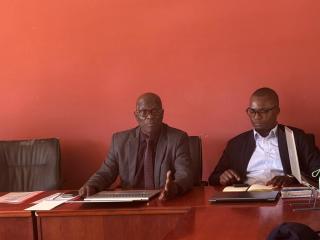
OPUWO, 02 May 2026- Fillemon Wise Immanuel, Minister of Justice and Labour Relations during the International Workers Day celebrations in Opuwo. (Photo: Contributed) NAMPA
NAMPA
OKANGHUDI, 02 May 2026 - The Ohangwena regional governor Kadiva’s Hamutumwa during the courtesy visit to the former president Hifikepunye Pohamba at Okanghudi village on Saturday. (Photo: presidency)
NAMPA
OKANGHUDI- 02 May 2026 - Former President Hifikepunye Pohamba and President Netumbo Nandi-Ndaitwah during the courtesy visit by the president at his homestead in Okanghudi on Saturday. (photo: contributed).
NAMPA
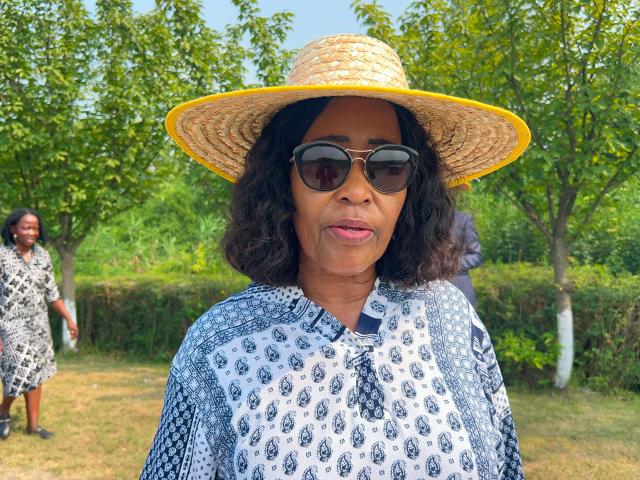
LÜDERITZ, 01 May 2026 - Vice President Lucia Witbooi, officially opening the 19th Annual Lüderitz Crayfish Festival. (Photo: Contributed)
NAMPA
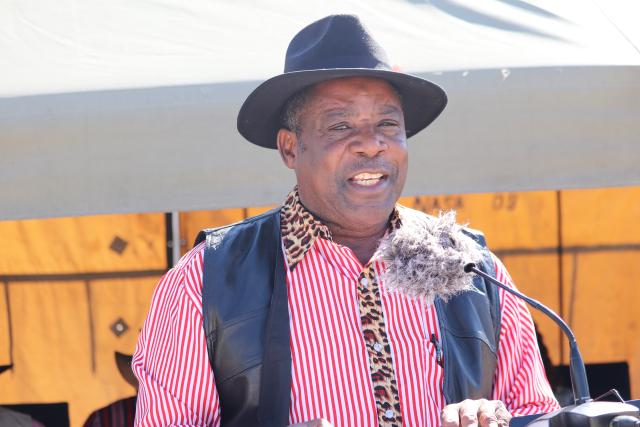
OPUWO, 01 May 2026- Governor of the Kunene Region Vipuakuje Muharukua addressing the International Workers' Day commemorations at Opuwo. (Photo: Contributed)
NAMPA
OPUWO, 01 MAY 2026- President Netumbo Nandi-Ndaitwah addressing the International Workers' Day commemoration at Opuwo in the Kunene region. (Photo: Contributed)
NAMPA
Comprehensive Compelling Credible Content
#14
Namibian Regions
#23
Journalists
#16
SADC Countries
#123 000
Monthly Website Users
Top News Site
In Southern Africa
#10
Partner Agencies Across the globe

International News Photos

A Doppstadt Inventhor 6.2 Plus shredder machine operates at the IFAT Munich, a trade fair dedicated to environmental technologies across water, wastewater, waste and resource management, in Munich, southern Germany, on May 4, 2026. According to organisers, more than 3,000 exhibitors from more than 60 countries are presenting their strategies and innovations during the fair running until May 7, 2026. (Photo by Michaela STACHE / AFP)
NAMPA / AFP
Members the Iraqi Antiquities Authority maintenance team discus the restoration work of the Great Ziggurat temple in the ancient city of Ur, believed to be the birthplace of Abraham, the patriarch of the world’s three monotheistic religions, located now in  Iraq's southern Dhi Qar province, some 16 kilometres from the centre of the city of Nasiriyah, on May 4, 2026. The ziggurat, one of several structures built by the ancient Sumerians in what is now modern-day Iraq, was believed to be the dwelling place of the gods. The temple at its summit was therefore off-limits to all but priests and other highly revered figures. Today, the Great Ziggurat is undergoing careful restoration, carried out by local craftsmen using regionally sourced materials, including bricks specially produced to match original ancient samples. (Photo by Assad NIYAZI / AFP)
NAMPA / AFP
Members the Iraqi Antiquities Authority maintenance team discus the restoration work of the Great Ziggurat temple in the ancient city of Ur, believed to be the birthplace of Abraham, the patriarch of the world’s three monotheistic religions, located now in  Iraq's southern Dhi Qar province, some 16 kilometres from the centre of the city of Nasiriyah, on May 4, 2026. The ziggurat, one of several structures built by the ancient Sumerians in what is now modern-day Iraq, was believed to be the dwelling place of the gods. The temple at its summit was therefore off-limits to all but priests and other highly revered figures. Today, the Great Ziggurat is undergoing careful restoration, carried out by local craftsmen using regionally sourced materials, including bricks specially produced to match original ancient samples. (Photo by Assad NIYAZI / AFP)
NAMPA / AFP
Members of the Iraqi Antiquities Authority maintenance team, works to restore the  sirs at the Great Ziggurat temple in the ancient city of Ur, believed to be the birthplace of Abraham, the patriarch of the world’s three monotheistic religions, located now in  Iraq's southern Dhi Qar province, some 16 kilometres from the centre of the city of Nasiriyah, on May 4, 2026. The ziggurat, one of several structures built by the ancient Sumerians in what is now modern-day Iraq, was believed to be the dwelling place of the gods. The temple at its summit was therefore off-limits to all but priests and other highly revered figures. Today, the Great Ziggurat is undergoing careful restoration, carried out by local craftsmen using regionally sourced materials, including bricks specially produced to match original ancient samples. (Photo by Assad NIYAZI / AFP)
NAMPA / AFP
A member of the Iraqi Antiquities Authority maintenance team, walks along a path as works take place to restore the Great Ziggurat temple in the ancient city of Ur, believed to be the birthplace of Abraham, the patriarch of the world’s three monotheistic religions, located now in  Iraq's southern Dhi Qar province, some 16 kilometres from the centre of the city of Nasiriyah, on May 4, 2026. The ziggurat, one of several structures built by the ancient Sumerians in what is now modern-day Iraq, was believed to be the dwelling place of the gods. The temple at its summit was therefore off-limits to all but priests and other highly revered figures. Today, the Great Ziggurat is undergoing careful restoration, carried out by local craftsmen using regionally sourced materials, including bricks specially produced to match original ancient samples. (Photo by Assad NIYAZI / AFP)
NAMPA / AFP
Cuneiform writing is pictured as a maintenance team from the Iraqi Antiquities Authority, works to restore the Great Ziggurat temple in the ancient city of Ur, believed to be the birthplace of Abraham, the patriarch of the world’s three monotheistic religions, located now in  Iraq's southern Dhi Qar province, some 16 kilometres from the centre of the city of Nasiriyah, on May 4, 2026. The ziggurat, one of several structures built by the ancient Sumerians in what is now modern-day Iraq, was believed to be the dwelling place of the gods. The temple at its summit was therefore off-limits to all but priests and other highly revered figures. Today, the Great Ziggurat is undergoing careful restoration, carried out by local craftsmen using regionally sourced materials, including bricks specially produced to match original ancient samples. (Photo by Assad NIYAZI / AFP)
NAMPA / AFP
Members of the Iraqi Antiquities Authority maintenance team, work to restore the Great Ziggurat temple in the ancient city of Ur, believed to be the birthplace of Abraham, the patriarch of the world’s three monotheistic religions, located now in  Iraq's southern Dhi Qar province, some 16 kilometres from the centre of the city of Nasiriyah, on May 4, 2026. The ziggurat, one of several structures built by the ancient Sumerians in what is now modern-day Iraq, was believed to be the dwelling place of the gods. The temple at its summit was therefore off-limits to all but priests and other highly revered figures. Today, the Great Ziggurat is undergoing careful restoration, carried out by local craftsmen using regionally sourced materials, including bricks specially produced to match original ancient samples. (Photo by Assad NIYAZI / AFP)
NAMPA / AFP
Members of the Iraqi Antiquities Authority maintenance team, walks up the stairs as ongoing work takes place to restore the Great Ziggurat temple in the ancient city of Ur, believed to be the birthplace of Abraham, the patriarch of the world’s three monotheistic religions, located now in  Iraq's southern Dhi Qar province, some 16 kilometres from the centre of the city of Nasiriyah, on May 4, 2026. The ziggurat, one of several structures built by the ancient Sumerians in what is now modern-day Iraq, was believed to be the dwelling place of the gods. The temple at its summit was therefore off-limits to all but priests and other highly revered figures. Today, the Great Ziggurat is undergoing careful restoration, carried out by local craftsmen using regionally sourced materials, including bricks specially produced to match original ancient samples. (Photo by Assad NIYAZI / AFP)
NAMPA / AFP