NEW CHAPTER FOR OSHANA AS IIPINGE GAINS MOMENTUM
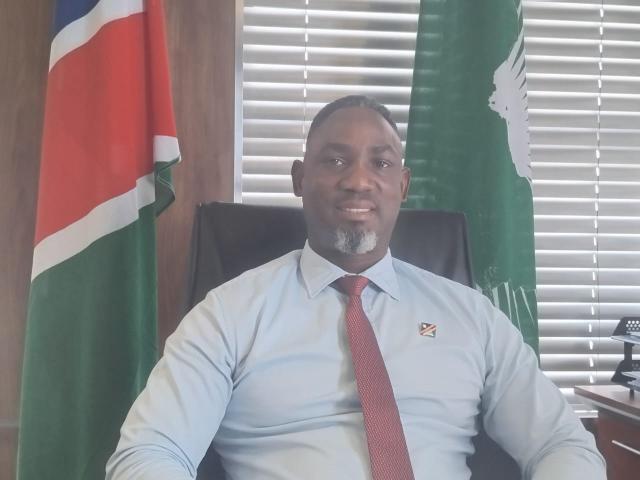 WINDHOEK, 20 March 2026 - Oshana Regional Governor Hofni Iipinge (Photo: Andreas Thomas) NAMPA
By Andreas Thomas
(NAMPA FEATURES SERVICE)
OSHAKATI, 26 MAR (NAMPA) - Defined by action, accessibility, and grassroots engagement, a quiet but determined leadership is taking shape in Namibia’s Oshana Region under Governor Hofni Alugodhi Iipinge.
At his offices at the Oshana Regional Council in Oshakati, he regularly pauses to greet staff and community members who call out to him with easy familiarity, showing little trace of ceremonial distance.
Instead, he listens attentively, occasionally jotting down notes, his tone firm yet conversational, a leadership style shaped as much by village life as by years within political structures.
Born in Oshakati but raised in Elim in the neighbouring Omusati Region, Iipinge describes himself as “a village boy.”
His early education began at a local kindergarten and continued through to senior primary level, before he completed his secondary schooling at Mweshipandeka High School in Ongwediva.
Those formative years, he says, instilled resilience and a deep connection to ordinary Namibians.
“I was raised by my grandparents, like any other child in the north,” he recalls, describing a childhood grounded in modest means but strong communal values.
That upbringing would later shape his leadership approach - practical, accessible and firmly rooted in the realities of the communities he now serves.
Iipinge’s appointment as Oshana governor eight months ago by President Netumbo Nandi-Ndaitwah came at a time when the region faced mounting socio-economic challenges, including youth unemployment and growing service delivery demands.
His rise from the ranks of the Swapo Party to regional executive leadership signals not only personal advancement, but also a broader generational shift in governance.
Transitioning from party structures to public administration, he now carries the responsibility of translating political commitments into tangible development outcomes.
“I never dreamed of becoming a governor,” he admits. “You don’t apply for this position. Leadership comes with responsibility when the time comes.”
Before fully entering politics, Iipinge worked as a teacher, specialising in agriculture and life science.
After completing a three-year teaching diploma at the former Ongwediva College of Education, he taught at Ekundu Combined School in the Omusati Region.
His experience in rural education sharpened his understanding of inequality within the sector, exposing him to the structural challenges faced by learners and teachers alike.
He remained in the classroom for just over two years until 2009, when his career took a different turn and he joined the former Ministry of Youth, Sport and Culture as a culture officer in Oshana.
“I was a culture officer in the Oshana Region for five years. I was then sent to the Erongo Region because there was no culture officer in the region,” he explains.
Parallel to his professional work, Iipinge steadily built his political career within the Swapo Party Youth League (SPYL).
Starting as a branch youth secretary in Ongwediva in 2000, he rose through the ranks to become district secretary, a position he held for a decade.
During this time, he balanced teaching with extensive grassroots mobilisation, travelling regularly to organise meetings and educate young people on the party’s constitution.
“I would teach during the week and then travel back to engage youth, organise meetings, and build structures,” he recalls.
His entry into national politics came in 2017, when he was elected to the SPYL central committee at a congress in Katima Mulilo. He later served as secretary for education in the youth league’s national executive until 2022.
That same year marked another milestone when he was elected to the ruling party’s central committee and later to its influential political bureau.
He emphasises that this progression was not automatic, but earned through internal democratic processes, reflecting both his standing within the party and his long-term commitment to its ideals.
In 2016, Iipinge made a decisive career shift, resigning from his teaching post at Onampira Combined School to pursue business and focus fully on politics.
This was after he came back to teaching, after resigning from his culture officer post in Erongo, to return home to Oshana to take over family responsibilities.
“I resigned deliberately because I wanted to do business and serve my party. It felt like you’re only confined to the classroom and cannot travel,” he says.
However, his attempts to establish himself in business, including ventures in construction, fishing and agriculture, were met with scepticism.
“When you are a politician and you try to do business, people say you are benefiting unfairly, even when it is not true,” he says.
Ultimately, he abandoned those pursuits, returning his full attention to political work, a decision that, in hindsight, positioned him for his current governorship role.
Now leading Oshana, one of Namibia’s key northern regions, Iipinge rejects the idea of a governor as a purely symbolic figure.
“I am not here to sit,” he says. “I have to go to every corner of the region.”
Shortly after his appointment in June 2025, he undertook a comprehensive familiarisation tour across all 11 constituencies.
These engagements included meetings with traditional authorities and local communities, aimed at gathering first-hand insight into development challenges.
“That is where we can hear a lot of the challenges. And we are here to solve those challenges, because if you are not talking to the community members, then you cannot hear anything,” he explains.
This consultative approach has shaped his priorities, with agriculture emerging as a central focus. He is spearheading a 10-hectare agricultural project in the Okatyali constituency, expected to create employment for around 50 young people once operational.
Pipelines have already been secured from the Ministry of Agriculture and will be used to channel water to the site from a distance of seven kilometres.
Beyond agriculture, his development agenda includes education, infrastructure and youth empowerment, which he views as critical to long-term regional growth.
One of his most immediate interventions has been in the education sector, where declining performance has raised concern.
Oshana ranked 14th in the 2025 Namibia Senior Secondary Certificate Ordinary examination results, down from 13th in 2024.
“Oshana cannot be the last region. We have the chance to rise again,” he says.
His approach emphasises proactive problem-solving, often addressing issues before they escalate into public complaints.
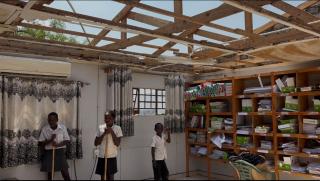
“No child should learn under a tree or sit on the floor,” Iipinge says, referring to efforts to improve school infrastructure and provide furniture and uniforms to vulnerable learners.
Although firmly rooted in Swapo Party ideology, Iipinge maintains that his role extends beyond partisan lines.
“I don’t work in isolation,” he says, pointing to collaboration with regional councillors, traditional leaders, government institutions and the private sector.
At the same time, he remains clear about his mandate to implement the party’s manifesto, aligned with the Sixth National Development Plan.
He has also welcomed the decentralisation of government services to the region, noting that it improves efficiency and responsiveness.
However, he cautions that incomplete decentralisation continues to delay programme implementation.
“If we can get all the ministries decentralised, it can assist us because we can sit with all the directors of those ministries, regional councillors and the chief regional officer to deliberate and digest how we can make use of the budget,” he says.
Eight months into office, Iipinge speaks less about plans and more about execution. From agricultural projects to education support programmes and infrastructure improvements, he highlights tangible interventions already underway.
“I am not planning anymore, now I am implementing,” he states.
When asked how he hopes to be remembered, his answer is simple: “As a leader who acted.”
For a man who began his education under a tree, his leadership now centres on ensuring that future generations do not face the same conditions.
In Oshana, that vision is no longer abstract. It is unfolding steadily, project by project, decision by decision – a leadership in the making, shaped by action rather than rhetoric.
(NAMPA)
AT/AS/EK