News
ABOUT US
NAMPA UNIVERSE
PARTNERS




USAKOS, 03 November 2026 - President of the United Democratic Front (UDF) Hendrik Goabaeb seated with the widow of the late Simson Tjongarero, Milka, during a courtesy visit at his family home in Usakos. (Photo by: Isabel Bento) NAMPA
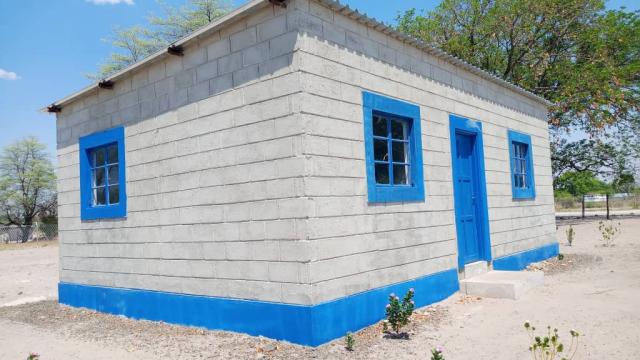
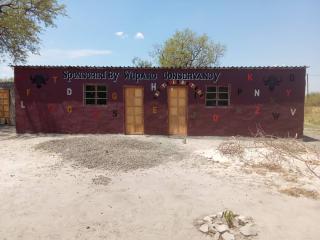
SANGWALI, 01 November 2026 - The newly constructed staff room at Samudono Primary School is part of the infrastructure and community development projects undertaken by the Wuparo Conservancy in the Zambezi in the current financial year. (Photo: Contributed)

SANGWALI, 01 November 2026 - The Wuparo Conservancy in the Zambezi Region’s Judea Lyabboloma Constituency generated N$3.51 million in revenue during the 2026 financial year. This is contained in a report presented by conservancy manager Beven Shakwa Muyenga during its Annual General Meeting (AGM) held at Sangwali on Sunday. (Photo: Contributed)
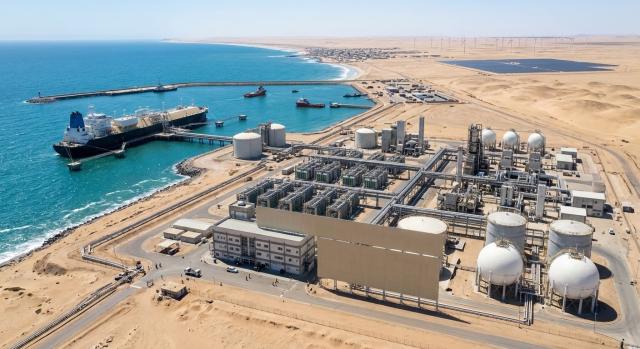
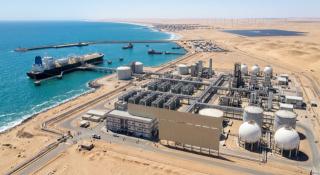
WINDJOEK, 03 November 2026 - CMMZE Energy Namibia (Pty) Ltd has announced a N$17 billion green hydrogen and ammonia project in Henties Bay that will produce 210 000 tonnes of green ammonia a year for export to Europe. (Photo contributed) NAMPA

BLOUBERG, 01 November 2026 - A weekend of community camaraderie culminated in victory for Kalahari FC, who took home first place at the Blouberg Primary School Open Tournament fundraiser. (Photo: Contributed)

BLOUBERG, 01 November 2026 - Kalahari FC won first place at the Blouberg Primary School Open Tournament fundraiser over the weekend. (Photo: Contributed)

WINDHOEK, 02 November 2026 - The Performance Management System (PMS) Workshop for Local Authorities is officially underway at NIPAM, supported by the Prime Minister's Charity Foundation Programme for Local Authorities. (Photo: Contributed) NAMPA
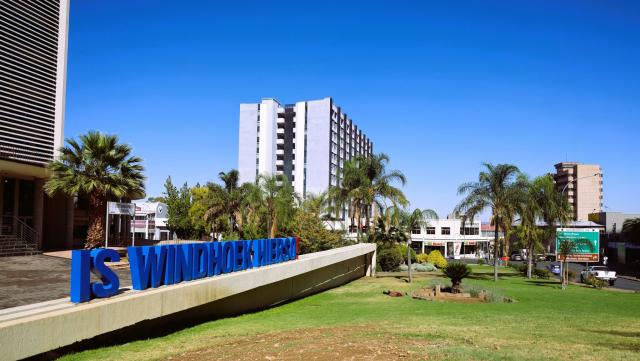
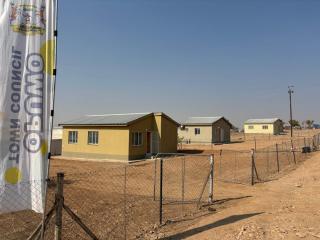
WINDHOEK, 14 September 2026 - The Windhoek City Council has approved a range of resolutions addressing housing shortages, traffic safety, and technology-enhanced policing. (Photo: Contributed) NAMPA

(261104) -- WASHINGTON, Nov. 4, 2026 (Xinhua) -- This photo taken on Nov. 3, 2026 shows the U.S. Capitol building in Washington, D.C., the United States. Democrats are projected to flip control of the U.S. Senate after winning several key races in battleground states, securing control of both chambers of Congress in the midterm elections, election forecasting agency Decision Desk HQ reported late Tuesday. (Xinhua/Li Rui)
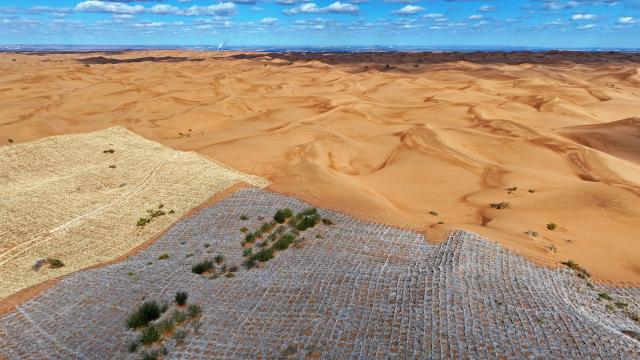
(261104) -- ZHONGWEI, Nov. 4, 2026 (Xinhua) -- An aerial drone photo taken on Oct. 17, 2026 shows a view of the desert control project in the southeastern edge of the Tengger Desert, Zhongwei City, northwest China's Ningxia Hui Autonomous Region. Zhongwei spreading on the southeastern edge of the Tengger Desert was once among China's hardest-hit areas in terms of encroaching sand. In the early 1950s, dunes stood just a few kilometers from the city, swallowing farmland and threatening to encroach upon the Yellow River and the Baotou-Lanzhou Railway, China's first rail line through a desert. Over the past seven decades, workers have installed straw grids across more than 430,000 mu (about 28,700 hectares) of desert in Ningxia and planted over 100 million drought-resistant shrubs. Last year, the region completed a 153-kilometer-long sand-control belt along the edge of the Tengger Desert, further strengthening its defenses against desert expansion. And the local ecological environment is being improved year by year. (Xinhua/Wang Peng)
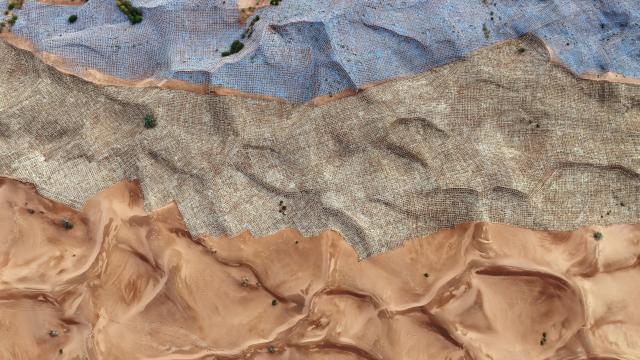
(261104) -- ZHONGWEI, Nov. 4, 2026 (Xinhua) -- An aerial drone photo taken on Oct. 17, 2026 shows a view of the desert control project in the southeastern edge of the Tengger Desert, Zhongwei City, northwest China's Ningxia Hui Autonomous Region. Zhongwei spreading on the southeastern edge of the Tengger Desert was once among China's hardest-hit areas in terms of encroaching sand. In the early 1950s, dunes stood just a few kilometers from the city, swallowing farmland and threatening to encroach upon the Yellow River and the Baotou-Lanzhou Railway, China's first rail line through a desert. Over the past seven decades, workers have installed straw grids across more than 430,000 mu (about 28,700 hectares) of desert in Ningxia and planted over 100 million drought-resistant shrubs. Last year, the region completed a 153-kilometer-long sand-control belt along the edge of the Tengger Desert, further strengthening its defenses against desert expansion. And the local ecological environment is being improved year by year. (Xinhua/Wang Peng)
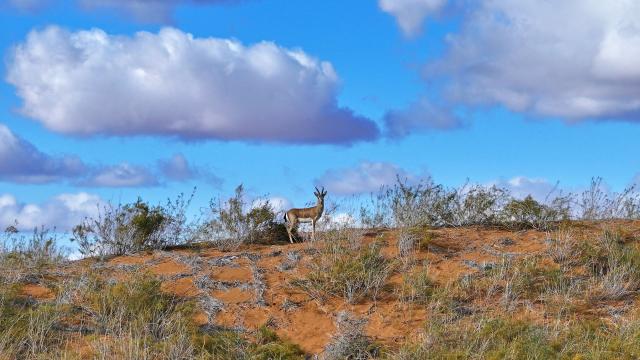
(261104) -- ZHONGWEI, Nov. 4, 2026 (Xinhua) -- A drone photo taken on Oct. 17, 2026 shows a goitered gazelle at the southeastern edge of the Tengger Desert in Zhongwei City, northwest China's Ningxia Hui Autonomous Region. Zhongwei spreading on the southeastern edge of the Tengger Desert was once among China's hardest-hit areas in terms of encroaching sand. In the early 1950s, dunes stood just a few kilometers from the city, swallowing farmland and threatening to encroach upon the Yellow River and the Baotou-Lanzhou Railway, China's first rail line through a desert. Over the past seven decades, workers have installed straw grids across more than 430,000 mu (about 28,700 hectares) of desert in Ningxia and planted over 100 million drought-resistant shrubs. Last year, the region completed a 153-kilometer-long sand-control belt along the edge of the Tengger Desert, further strengthening its defenses against desert expansion. And the local ecological environment is being improved year by year. (Xinhua/Wang Peng)
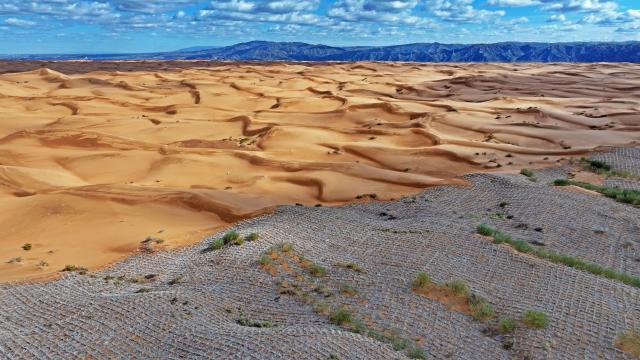
(261104) -- ZHONGWEI, Nov. 4, 2026 (Xinhua) -- An aerial drone photo taken on Oct. 17, 2026 shows a view of the desert control project in the southeastern edge of the Tengger Desert, Zhongwei City, northwest China's Ningxia Hui Autonomous Region. Zhongwei spreading on the southeastern edge of the Tengger Desert was once among China's hardest-hit areas in terms of encroaching sand. In the early 1950s, dunes stood just a few kilometers from the city, swallowing farmland and threatening to encroach upon the Yellow River and the Baotou-Lanzhou Railway, China's first rail line through a desert. Over the past seven decades, workers have installed straw grids across more than 430,000 mu (about 28,700 hectares) of desert in Ningxia and planted over 100 million drought-resistant shrubs. Last year, the region completed a 153-kilometer-long sand-control belt along the edge of the Tengger Desert, further strengthening its defenses against desert expansion. And the local ecological environment is being improved year by year. (Xinhua/Wang Peng)
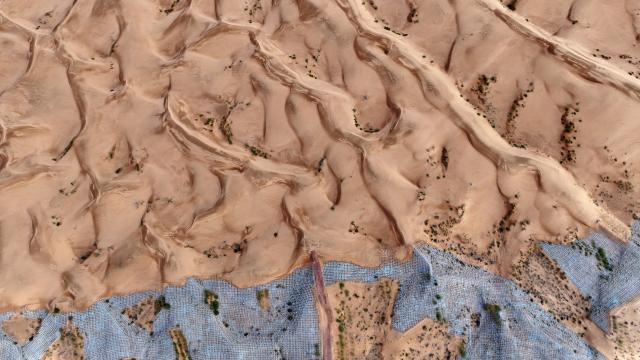
(261104) -- ZHONGWEI, Nov. 4, 2026 (Xinhua) -- An aerial drone photo taken on Oct. 17, 2026 shows a view of the desert control project in the southeastern edge of the Tengger Desert, Zhongwei City, northwest China's Ningxia Hui Autonomous Region. Zhongwei spreading on the southeastern edge of the Tengger Desert was once among China's hardest-hit areas in terms of encroaching sand. In the early 1950s, dunes stood just a few kilometers from the city, swallowing farmland and threatening to encroach upon the Yellow River and the Baotou-Lanzhou Railway, China's first rail line through a desert. Over the past seven decades, workers have installed straw grids across more than 430,000 mu (about 28,700 hectares) of desert in Ningxia and planted over 100 million drought-resistant shrubs. Last year, the region completed a 153-kilometer-long sand-control belt along the edge of the Tengger Desert, further strengthening its defenses against desert expansion. And the local ecological environment is being improved year by year. (Xinhua/Wang Peng)
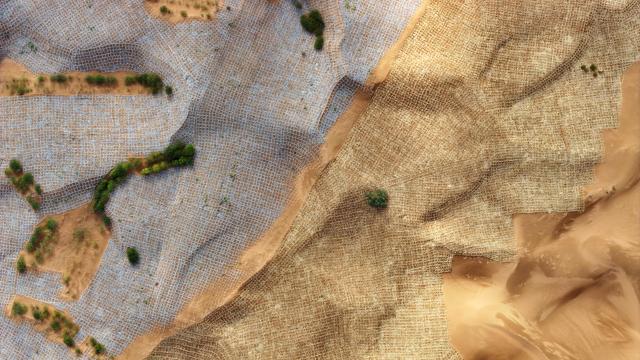
(261104) -- ZHONGWEI, Nov. 4, 2026 (Xinhua) -- An aerial drone photo taken on Oct. 17, 2026 shows a view of the desert control project in the southeastern edge of the Tengger Desert, Zhongwei City, northwest China's Ningxia Hui Autonomous Region. Zhongwei spreading on the southeastern edge of the Tengger Desert was once among China's hardest-hit areas in terms of encroaching sand. In the early 1950s, dunes stood just a few kilometers from the city, swallowing farmland and threatening to encroach upon the Yellow River and the Baotou-Lanzhou Railway, China's first rail line through a desert. Over the past seven decades, workers have installed straw grids across more than 430,000 mu (about 28,700 hectares) of desert in Ningxia and planted over 100 million drought-resistant shrubs. Last year, the region completed a 153-kilometer-long sand-control belt along the edge of the Tengger Desert, further strengthening its defenses against desert expansion. And the local ecological environment is being improved year by year. (Xinhua/Wang Peng)
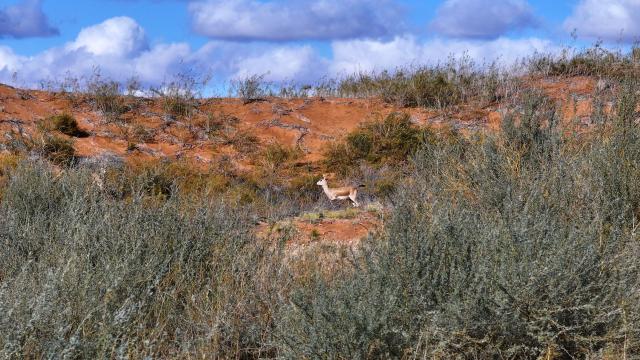
(261104) -- ZHONGWEI, Nov. 4, 2026 (Xinhua) -- A drone photo taken on Oct. 17, 2026 shows a goitered gazelle at the southeastern edge of the Tengger Desert in Zhongwei City, northwest China's Ningxia Hui Autonomous Region. Zhongwei spreading on the southeastern edge of the Tengger Desert was once among China's hardest-hit areas in terms of encroaching sand. In the early 1950s, dunes stood just a few kilometers from the city, swallowing farmland and threatening to encroach upon the Yellow River and the Baotou-Lanzhou Railway, China's first rail line through a desert. Over the past seven decades, workers have installed straw grids across more than 430,000 mu (about 28,700 hectares) of desert in Ningxia and planted over 100 million drought-resistant shrubs. Last year, the region completed a 153-kilometer-long sand-control belt along the edge of the Tengger Desert, further strengthening its defenses against desert expansion. And the local ecological environment is being improved year by year. (Xinhua/Wang Peng)