DNA testing backlog hits 7 000 cases

NAMPA
2026-06-01
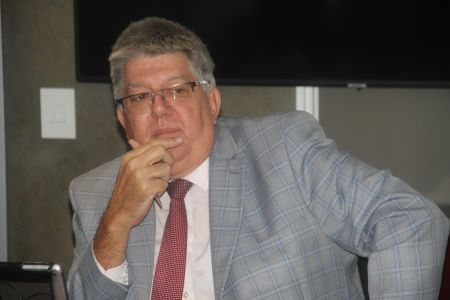
WINDHOEK, 27 January 2020 – National Head of the Criminal Investigation Directorate, Commissioner Nelius Becker. (Photo by: Zebaldt Ngaruka) NAMPA WINDHOEK, 27 January 2020 – National Head of the Criminal Investigation Directorate, Commissioner Nelius Becker. (Photo by: Zebaldt Ngaruka) NAMPA
By Uakutura Kambaekua
WINDHOEK, 01 JUN (NAMPA) – The Namibian Police Forensic Science Institute (NPFSI), formerly the National Forensic Science Institute, is facing a significant backlog of 7 000 DNA cases, which impacts the country’s investigative and judicial capacities.
This was revealed by Commissioner Nelius Becker, head of forensics at the Namibian Police, in a recent interview with Nampa regarding the force’s efforts to expedite DNA cases.
The backlog dates back to 2021, when over 4 300 DNA samples were reported, costing an estimated N.dollars 30 million annually to resolve.
According to Becker, challenges include underfunding, as the operational budget for the DNA division has been around N.dollars 3.5 million, while clearing the backlog requires over N.dollars 30 million.
Becker noted that the facility receives an average of 1 000 new cases quarterly, with a clearance rate exceeding 70 per cent for incoming samples.
“We currently have a backlog of 7 000 cases on DNA. Apart from that, we receive on average per quarter (every three months) around 1 000 new cases, of which we complete above 70 per cent per quarter,” he revealed.
Despite consistent output, the existing backlog of 7 000 cases indicates that the laboratory’s processing of new evidence is not keeping pace with the overall historic load.
Although Becker did not disclose data regarding specific prosecutions, he underscored the critical reliance of the courts on forensic evidence, highlighting that DNA analysis is imperative to the majority of cases brought before the bench, serving as a primary tool for substantiating allegations in murder and rape matters.
“While I do not have the exact statistics, the majority of rape and murder cases that featured in the high and other courts involve DNA analysis, and many high-profile cases rely on forensic evidence to support allegations,” he remarked.
He stated that a lack of funding has created a bottleneck in case resolutions, emphasising that scientific advancements are costly and require additional funds in enhancing the lab’s equipment.
“The biggest obstacle to even more effective service delivery is funding. Science is expensive, and a lot of the instruments at the lab are near the end of their life and will need replacement. With sufficient budget, the sky is the limit,” he reiterated.
He noted that the Scene of Crime Division conducts ongoing training and also trains first responders, typically police officers, to preserve and maintain the integrity of crime scenes.
“The Scene of Crime Division also reports under the NPFSI, and we also guide decentralised Scene of Crime Subdivision members on the front lines in the regions when and if they request our assistance. We frequently have ongoing training and also provide training to our first responders in the preservation and keeping the integrity of the crime scene,” he stated.
Becker confirmed that NamPol is considering establishing laboratories in other regions, despite ongoing budget constraints for future expansion.
He stated, “Setting up these facilities is expensive due to the need for specialised layouts, equipment, trained personnel, and essential supplies for a fully operational laboratory. We are currently preparing the budget for future expansion.”
Namibia has previously sent samples to Canada and South Africa, but Becker emphasised that the country is self-sufficient in laboratory services and does not rely on foreign assistance.
“All DNA analysis for criminal cases and disaster victim identification (DVI) is conducted at the NPFSI in Windhoek,” he noted.
He added that efforts are underway to reduce backlogs accumulated over many years due to underfunding, despite a limited budget.
(NAMPA)
UK/PS/AS

Latest NAMPA photos

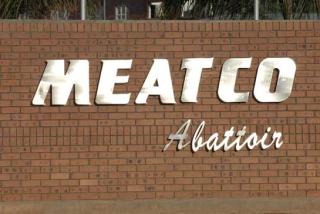
WINDHOEK, 24 November 2026 - The Meat Corporation of Namibia (Meatco) workers could work half their hours and earn half their basic pay from 1 January to 31 March 2027, as the company struggles to pay a wage bill above N$15.5 million a month.

(Photo contributed) NAMPA

WINDHOEK, 24 November 2026 - The Meat Corporation of Namibia (Meatco) workers could work half their hours and earn half their basic pay from 1 January to 31 March 2027, as the company struggles to pay a wage bill above N$15.5 million a month. (Photo contributed) NAMPA

NAMPA
WINDHOEK, 24 November 2026 - The Bankers Association of Namibia (BAN) Chairperson, Martha Murorua. 

(Photo contributed) NAMPA

WINDHOEK, 24 November 2026 - The Bankers Association of Namibia (BAN) Chairperson, Martha Murorua. (Photo contributed) NAMPA

NAMPA
WINDHOEK, 23 November 2026 - President Netumbo Nandi-Ndaitwah welcomed traditional leaders from the Uukwangali, Mbunza, Gciriku, Shambyu, and Hambukushu traditional authorities on Monday, with discussions centred on tackling urgent developmental and social issues in the Kavango regions. (Photo by: Uakutura Kambaekua) NAMPA

WINDHOEK, 23 November 2026 - President Netumbo Nandi-Ndaitwah welcomed traditional leaders from the Uukwangali, Mbunza, Gciriku, Shambyu, and Hambukushu traditional authorities on Monday, with discussions centred on tackling urgent developmental and social issues in the Kavango regions. (Photo by: Uakutura Kambaekua) NAMPA

NAMPA
WINDHOEK, 23 November 2026 - President Netumbo Nandi-Ndaitwah welcomed Atomic Energy Board Chairperson Dr Shitaleni Herman and his delegation to State House on Monday to discuss Namibia’s new Nuclear Industry Strategy and moving beyond raw uranium exports toward local value addition. (Photo by: Uakutura Kambaekua) NAMPA.
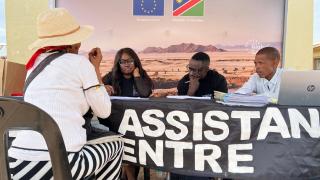
WINDHOEK, 23 November 2026 - President Netumbo Nandi-Ndaitwah welcomed Atomic Energy Board Chairperson Dr Shitaleni Herman and his delegation to State House on Monday to discuss Namibia’s new Nuclear Industry Strategy and moving beyond raw uranium exports toward local value addition. (Photo by: Uakutura Kambaekua) NAMPA.

NAMPA
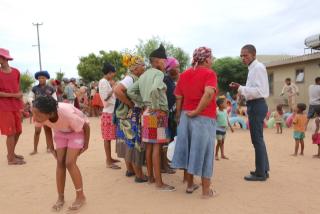
EPUKIRO, 20 November 2026 - Members of the San community attending a paralegal outreach spearheaded by the Legal Assistance Centre. (Photo: Contributed)
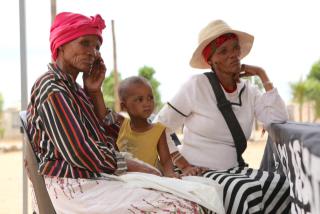
EPUKIRO, 20 November 2026 - Members of the San community attending a paralegal outreach spearheaded by the Legal Assistance Centre. (Photo: Contributed)
NAMPA
EPUKIRO, 20 November 2026 - Members of the San community attending a paralegal outreach spearheaded by the Legal Assistance Centre. (Photo: Contributed)
EPUKIRO, 20 November 2026 - Members of the San community attending a paralegal outreach spearheaded by the Legal Assistance Centre. (Photo: Contributed)

NAMPA
EPUKIRO, 20 November 2026 - Members of the San community attending a paralegal outreach spearheaded by the Legal Assistance Centre. (Photo: Contributed)

EPUKIRO, 20 November 2026 - Members of the San community attending a paralegal outreach spearheaded by the Legal Assistance Centre. (Photo: Contributed)

NAMPA
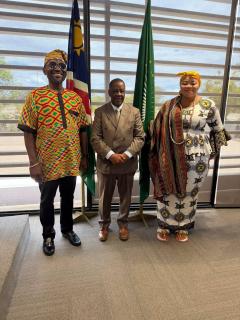
GOBABIS, 20 November 2026 - Omaheke Governor Pijoo Nganate with a delegation of traditional leaders from Ghana. (Photo: Contributed)

GOBABIS, 20 November 2026 - Omaheke Governor Pijoo Nganate with a delegation of traditional leaders from Ghana. (Photo: Contributed)

NAMPA