News
ABOUT US
NAMPA UNIVERSE
PARTNERS





WALVIS BAY, 06 November 2026 - Agriculture, Water,Fisheries and Land Reform, Erongo Governor Natalia /Goagoses and Castro Bros general manager Ricky de Castro during the christening of the Castro Kumata fishing vessel, through a partnership between Namibian owned Beki Kumata and Castro Bros fishing. (Photo by: Isabel Bento) NAMPA
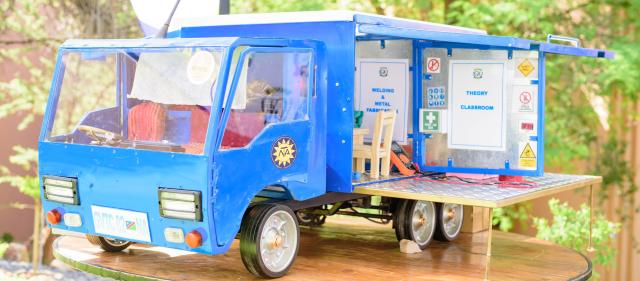
GOBABIS, 05 November 2026 - A miniature mobile vocational training unit, featuring a welding and metal fabrication section and a theory classroom, designed and produced by students at the Gobabis Vocational Training Centre as a demonstration of their practical skills and creativity. (Photo: Contributed)) NAMPA
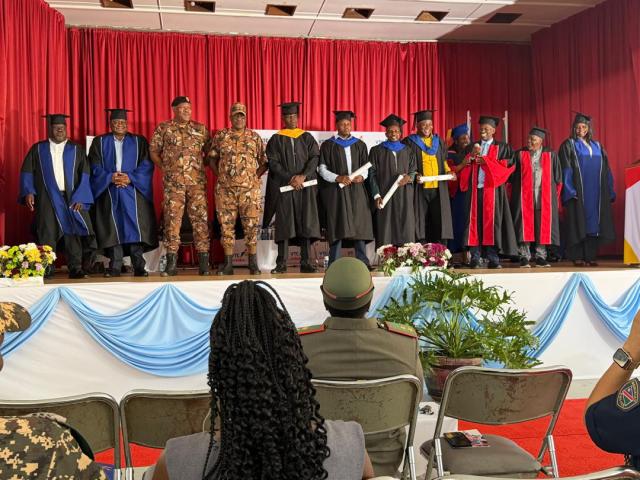
WINDHOEK, 05 November 2026 - Graduates from the Gobabis Vocational Training Centre (GVTC) Class of 2022 to June 2026 were urged to use their skills to create jobs and contribute to Namibia's development. (Photo: Contributed) NAMPA
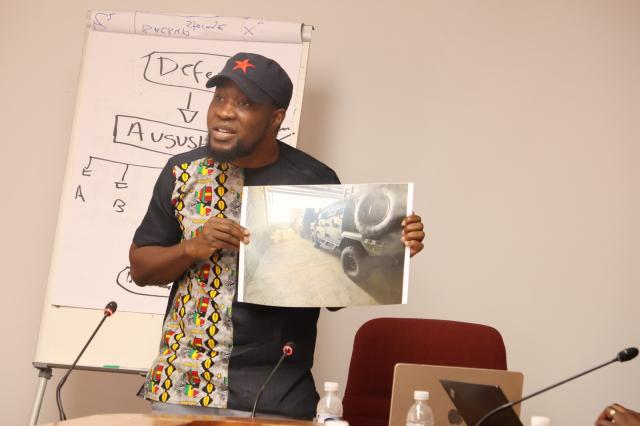
WINDHOEK, 05 November 2026 – AR leader Job Amupanda speaks to the media at Parliament, where he raised allegations of irregularities in August 26's fuel supply deals. (Photo by: Uakutura Kambaekua) NAMPA

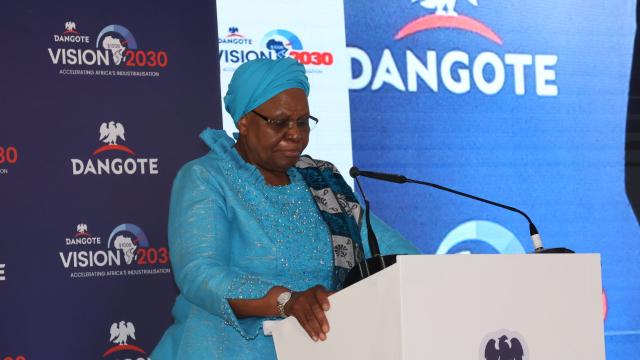
WINDHOEK, 04 November 2026 – Vice-President Lucia Witbooi has called for greater inclusion and support for autistic persons at the 6th World Autism Organisation Congress. (Photo: Contributed) NAMPA

WINDHOEK, 04 November 2026 - Eeshoke Chula Chula goalkeeper Misipile Sibeso pictured while at training at the Jan Mohr School sport ground during the Brave Warriors preparation for the 2027 Afcon qualifiers. (Photo: Hesron Kapanga) NAMPA
PRESIDENT
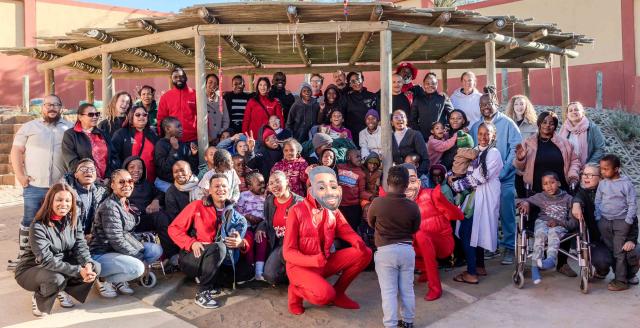
WINDHOEK, 04 November 2026 - Bank Windhoek employees giving back to the community during their empathy project. (Photo: Contributed)
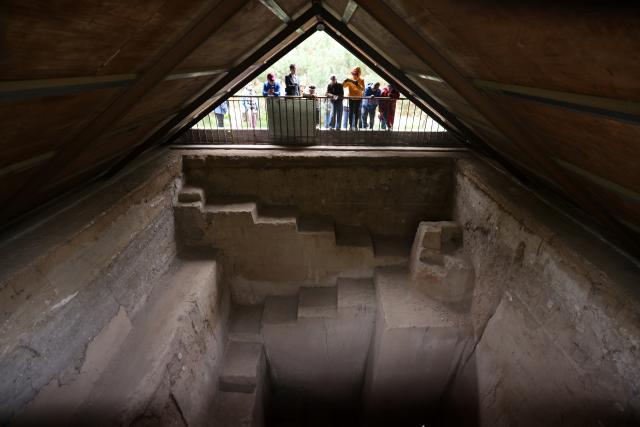
(261106) -- LANZHOU, Nov. 6, 2026 (Xinhua) -- People visit the Dadiwan Site, a Neolithic site dating back to approximately 7,800 to 4,800 years ago, in Qin'an County, northwest China's Gansu Province, Oct. 21, 2026. The site sits on a terrace on the bank of the upper reaches of the Hulu River, a tributary of the Weihe River. The Weihe River, the largest tributary of the Yellow River, rises in the Niaoshu Mountains in Weiyuan County, Dingxi City of northwest China's Gansu Province, and empties into the Yellow River in Tongguan County, Weinan City of northwest China's Shaanxi Province. Stretching 818 kilometers with a drainage area of over 134,000 square kilometers, the river and its basin span more than ten cities across northwest China's Shaanxi, Gansu provinces and Ningxia Hui Autonomous Region. The Weihe River basin is an important birthplace of the Chinese civilization, home to capitals of several ancient Chinese dynasties, and a key passage along the eastern section of the ancient Silk Road. Today, the river flows broad and mighty, flocks of waterbirds gather in large numbers, and the region's rich cultural traditions are thriving with renewed vitality. (Xinhua/Li Yibo)
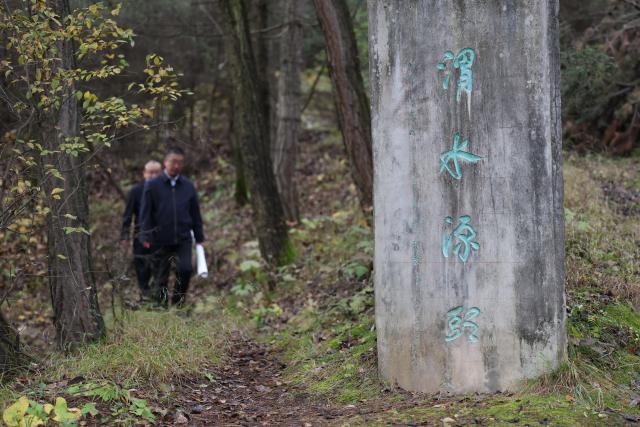
(261106) -- LANZHOU, Nov. 6, 2026 (Xinhua) -- Visitors trace the source of the Weihe River deep in the Niaoshu Mountains in Weiyuan County, northwest China's Gansu Province, Oct. 20, 2026. The Weihe River, the largest tributary of the Yellow River, rises in the Niaoshu Mountains in Weiyuan County, Dingxi City of northwest China's Gansu Province, and empties into the Yellow River in Tongguan County, Weinan City of northwest China's Shaanxi Province. Stretching 818 kilometers with a drainage area of over 134,000 square kilometers, the river and its basin span more than ten cities across northwest China's Shaanxi, Gansu provinces and Ningxia Hui Autonomous Region. The Weihe River basin is an important birthplace of the Chinese civilization, home to capitals of several ancient Chinese dynasties, and a key passage along the eastern section of the ancient Silk Road. Today, the river flows broad and mighty, flocks of waterbirds gather in large numbers, and the region's rich cultural traditions are thriving with renewed vitality. (Xinhua/Li Yibo)
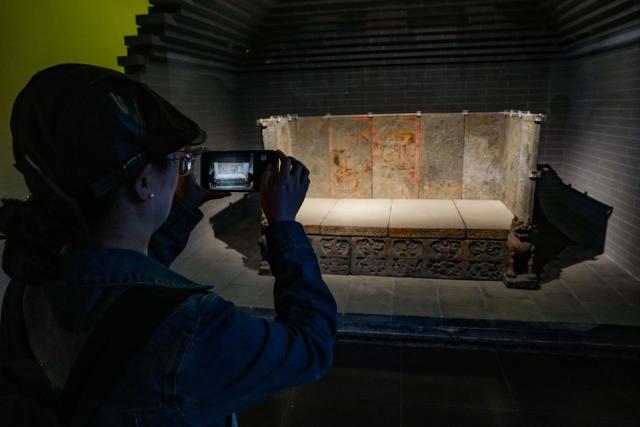
(261106) -- LANZHOU, Nov. 6, 2026 (Xinhua) -- A visitor takes pictures of an exhibit at Tianshui Museum in Tianshui, northwest China's Gansu Province, Oct. 20, 2026. The Weihe River, the largest tributary of the Yellow River, rises in the Niaoshu Mountains in Weiyuan County, Dingxi City of northwest China's Gansu Province, and empties into the Yellow River in Tongguan County, Weinan City of northwest China's Shaanxi Province. Stretching 818 kilometers with a drainage area of over 134,000 square kilometers, the river and its basin span more than ten cities across northwest China's Shaanxi, Gansu provinces and Ningxia Hui Autonomous Region. The Weihe River basin is an important birthplace of the Chinese civilization, home to capitals of several ancient Chinese dynasties, and a key passage along the eastern section of the ancient Silk Road. Today, the river flows broad and mighty, flocks of waterbirds gather in large numbers, and the region's rich cultural traditions are thriving with renewed vitality. (Xinhua/Lang Bingbing)
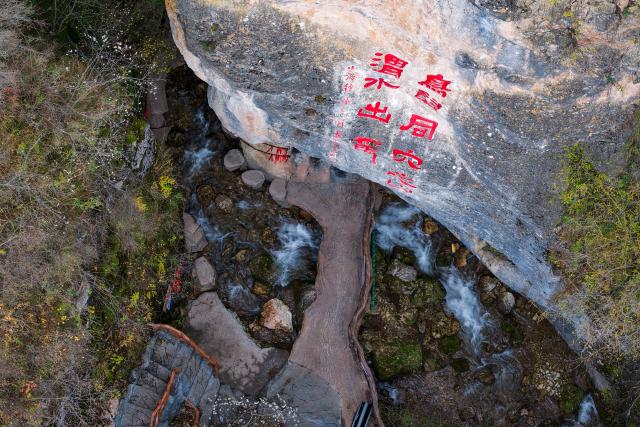
(261106) -- LANZHOU, Nov. 6, 2026 (Xinhua) -- An aerial drone photo taken on Oct. 19, 2026 shows a stream deep in the Niaoshu Mountains in Weiyuan County, northwest China's Gansu Province. The Weihe River, the largest tributary of the Yellow River, rises in the Niaoshu Mountains in Weiyuan County, Dingxi City of northwest China's Gansu Province, and empties into the Yellow River in Tongguan County, Weinan City of northwest China's Shaanxi Province. Stretching 818 kilometers with a drainage area of over 134,000 square kilometers, the river and its basin span more than ten cities across northwest China's Shaanxi, Gansu provinces and Ningxia Hui Autonomous Region. The Weihe River basin is an important birthplace of the Chinese civilization, home to capitals of several ancient Chinese dynasties, and a key passage along the eastern section of the ancient Silk Road. Today, the river flows broad and mighty, flocks of waterbirds gather in large numbers, and the region's rich cultural traditions are thriving with renewed vitality. (Xinhua/Lang Bingbing)
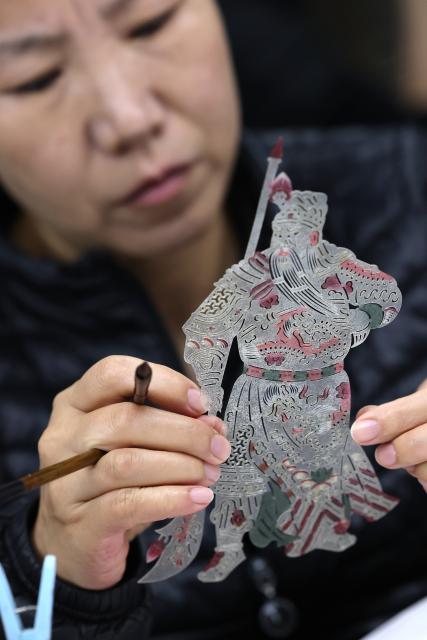
(261106) -- XI'AN, Nov. 6, 2026 (Xinhua) -- An artisan applies color to a shadow puppet at a shadow puppet themed park in Huazhou District, Weinan City, northwest China's Shaanxi Province, Oct. 25, 2026. The Weihe River, the largest tributary of the Yellow River, rises in the Niaoshu Mountains in Weiyuan County, Dingxi City of northwest China's Gansu Province, and empties into the Yellow River in Tongguan County, Weinan City of northwest China's Shaanxi Province. Stretching 818 kilometers with a drainage area of over 134,000 square kilometers, the river and its basin span more than ten cities across northwest China's Shaanxi, Gansu provinces and Ningxia Hui Autonomous Region. The Weihe River basin is an important birthplace of the Chinese civilization, home to capitals of several ancient Chinese dynasties, and a key passage along the eastern section of the ancient Silk Road. Today, the river flows broad and mighty, flocks of waterbirds gather in large numbers, and the region's rich cultural traditions are thriving with renewed vitality. (Xinhua/Li Yibo)
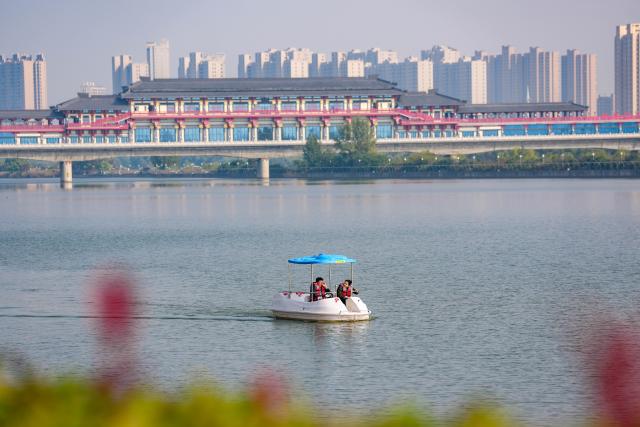
(261106) -- XI'AN, Nov. 6, 2026 (Xinhua) -- Tourists enjoy boating at Xianyang Lake, a scenic area on the urban section of the Weihe River, in Xianyang, northwest China's Shaanxi Province, Oct. 23, 2026. The Weihe River, the largest tributary of the Yellow River, rises in the Niaoshu Mountains in Weiyuan County, Dingxi City of northwest China's Gansu Province, and empties into the Yellow River in Tongguan County, Weinan City of northwest China's Shaanxi Province. Stretching 818 kilometers with a drainage area of over 134,000 square kilometers, the river and its basin span more than ten cities across northwest China's Shaanxi, Gansu provinces and Ningxia Hui Autonomous Region. The Weihe River basin is an important birthplace of the Chinese civilization, home to capitals of several ancient Chinese dynasties, and a key passage along the eastern section of the ancient Silk Road. Today, the river flows broad and mighty, flocks of waterbirds gather in large numbers, and the region's rich cultural traditions are thriving with renewed vitality. (Xinhua/Lang Bingbing)
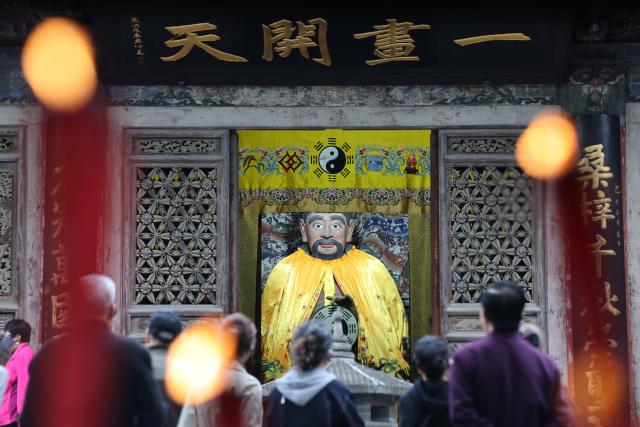
(261106) -- LANZHOU, Nov. 6, 2026 (Xinhua) -- Tourists visit Fuxi Temple in Tianshui City, northwest China's Gansu Province, Oct. 20, 2026. The Weihe River, the largest tributary of the Yellow River, rises in the Niaoshu Mountains in Weiyuan County, Dingxi City of northwest China's Gansu Province, and empties into the Yellow River in Tongguan County, Weinan City of northwest China's Shaanxi Province. Stretching 818 kilometers with a drainage area of over 134,000 square kilometers, the river and its basin span more than ten cities across northwest China's Shaanxi, Gansu provinces and Ningxia Hui Autonomous Region. The Weihe River basin is an important birthplace of the Chinese civilization, home to capitals of several ancient Chinese dynasties, and a key passage along the eastern section of the ancient Silk Road. Today, the river flows broad and mighty, flocks of waterbirds gather in large numbers, and the region's rich cultural traditions are thriving with renewed vitality. (Xinhua/Li Yibo)
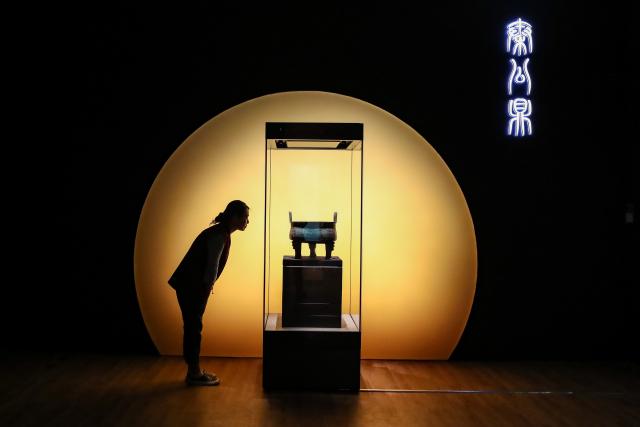
(261106) -- LANZHOU, Nov. 6, 2026 (Xinhua) -- A woman visits the Gansu Jiandu Museum in Lanzhou, northwest China's Gansu Province, May 18, 2025. The Weihe River, the largest tributary of the Yellow River, rises in the Niaoshu Mountains in Weiyuan County, Dingxi City of northwest China's Gansu Province, and empties into the Yellow River in Tongguan County, Weinan City of northwest China's Shaanxi Province. Stretching 818 kilometers with a drainage area of over 134,000 square kilometers, the river and its basin span more than ten cities across northwest China's Shaanxi, Gansu provinces and Ningxia Hui Autonomous Region. The Weihe River basin is an important birthplace of the Chinese civilization, home to capitals of several ancient Chinese dynasties, and a key passage along the eastern section of the ancient Silk Road. Today, the river flows broad and mighty, flocks of waterbirds gather in large numbers, and the region's rich cultural traditions are thriving with renewed vitality. (Xinhua/Lang Bingbing)