Nampa News Photos

SICHUAN, 08 July 2026 - Minister of Agriculture, Fisheries, Water and Land Reform, Inge Zaamwani. (Photo: Isabel Bento) NAMPA

SICHUAN, 08 July 2026 - Minister of Agriculture, Fisheries, Water and Land Reform, Inge Zaamwani. (Photo: Isabel Bento) NAMPA

NAMPA
OSHITAYI, 08 July 2026 - Ondangwa Urban Constituency Councillor Leonard Negonga address learners during the Ondangwa Urban Annual Constituency Culture Festival 2026 on Wednesday. (Photo: Ester Hakaala) NAMPA
OSHITAYI, 08 July 2026 - Ondangwa Urban Constituency Councillor Leonard Negonga address learners during the Ondangwa Urban Annual Constituency Culture Festival 2026 on Wednesday. (Photo: Ester Hakaala) NAMPA

NAMPA
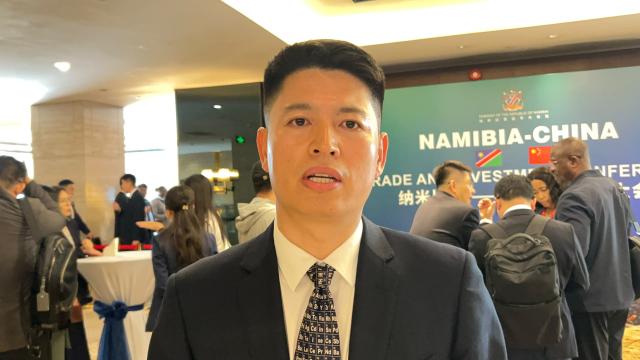
BEIJING, 09 July 2026 - Director of Sinomine Group and Chief Executive Officer of Sinomine Tsumeb Smelter, Logan Lou Yonggang. (Photo: Isabel Bento) NAMPA

BEIJING, 09 July 2026 - Director of Sinomine Group and Chief Executive Officer of Sinomine Tsumeb Smelter, Logan Lou Yonggang. (Photo: Isabel Bento) NAMPA

NAMPA
GABORONE, 06 July 2026 - Southern African officials will meet in Johannesburg from 15 to 17 July to advance public spending efficiency through cost-benefit analysis. (Photo: Contributed) NAMPA.

GABORONE, 06 July 2026 - Southern African officials will meet in Johannesburg from 15 to 17 July to advance public spending efficiency through cost-benefit analysis. (Photo: Contributed) NAMPA.

NAMPA
NEW YORK, 07 July 2026 - Diene Keita, Executive Director of UNFPA. (Photo: Contributed) NAMPA.

NEW YORK, 07 July 2026 - Diene Keita, Executive Director of UNFPA. (Photo: Contributed) NAMPA.

NAMPA
WINDHOEK, 07 July 2026 - Ana Beatriz Martins, European Union (EU) Ambassador to Namibia. (Photo: Contributed) NAMPA
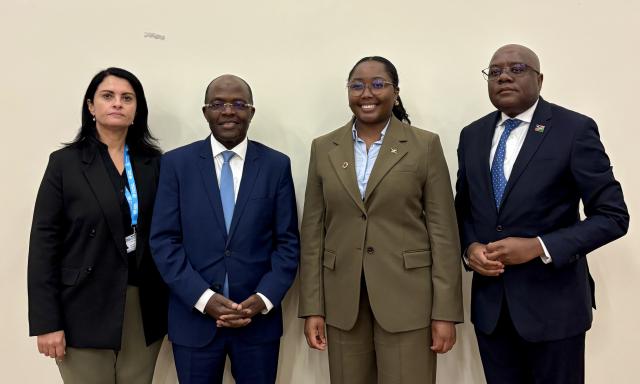
WINDHOEK, 07 July 2026 - Ana Beatriz Martins, European Union (EU) Ambassador to Namibia. (Photo: Contributed) NAMPA

NAMPA
GENEVA, 06 July 2026 - Minister of Information and Communication Technology, Emma Theofelus, pictured with Chairperson of the PowerCom Board, Eldorette Harmse, Director of the Telecommunication Development Bureau (BDT) at the International Telecommunication Union (ITU), Dr Cosmas Luckyson Zavazava; and Namibia's Ambassador to the Swiss Confederation and Permanent Representative to the United Nations Office in Geneva, Elvis Shiweda, during the Global Dialogue on AI Governance in Geneva, Switzerland, on Monday.

(Photo by: Josephina Simeon) NAMPA

GENEVA, 06 July 2026 - Minister of Information and Communication Technology, Emma Theofelus, pictured with Chairperson of the PowerCom Board, Eldorette Harmse, Director of the Telecommunication Development Bureau (BDT) at the International Telecommunication Union (ITU), Dr Cosmas Luckyson Zavazava; and Namibia's Ambassador to the Swiss Confederation and Permanent Representative to the United Nations Office in Geneva, Elvis Shiweda, during the Global Dialogue on AI Governance in Geneva, Switzerland, on Monday. (Photo by: Josephina Simeon) NAMPA

NAMPA
GUANGZHOU, 06 July 2026 - A car assembly line at the Guangzhou Automobile Group (GAC) car company. GAC is China’s state-owned automaker. Which manufactures vehicles under its own marques (GAC Motor and AION) and operates highly successful joint ventures with Honda and Toyota. With global reach across 86 regions, it is rapidly expanding into EVs and international production. (Photo by: Isabel Bento) NAMPA

GUANGZHOU, 06 July 2026 - A car assembly line at the Guangzhou Automobile Group (GAC) car company. GAC is China’s state-owned automaker. Which manufactures vehicles under its own marques (GAC Motor and AION) and operates highly successful joint ventures with Honda and Toyota. With global reach across 86 regions, it is rapidly expanding into EVs and international production. (Photo by: Isabel Bento) NAMPA

NAMPA
Comprehensive Compelling Credible Content
#14
Namibian Regions
#23
Journalists
#16
SADC Countries
#123 000
Monthly Website Users
Top News Site
In Southern Africa
#10
Partner Agencies Across the globe

International News Photos

(260709) -- TAXKORGAN, July 9, 2026 (Xinhua) -- This combo photo shows an aerial view of the valley where Duri Jarman and his family resided before relocation in Taxkorgan Tajik Autonomous County, northwest China's Xinjiang Uygur Autonomous Region, June 20, 2019 (above, drone photo) and an aerial view of the village where Duri Jarman and his family live in Taxkorgan Tajik Autonomous County, northwest China's Xinjiang Uygur Autonomous Region, June 26, 2026 (below, drone photo). This summer, happiness filled the air around the home of herdsman Duri Jarman. His youngest son Nurkerim tied the knot with his beloved woman. Weddings of the Tajik ethnic group usually last three days. Inscribed on the national intangible cultural heritage list in 2008, the wedding customs of the Tajik ethnic group maintain unique traditions and are always described as festivals of music, dance and food to showcase the resplendent newlyweds and their propitious marriage.
  In Aimin Village, this wedding also serves as a vivid epitome of the eight-year transformative leap brought by the poverty alleviation relocation program.
  In the winter of 2018, Jarman and his family benefited from the relocation policy for poverty alleviation and settled in Aimin Village. They gradually adapted to the changes, enjoying a new life different from that of their ancestors. Jarman ran a small grocery store with Nurkerim, while his eldest and second sons both landed stable new jobs. Nurkerim also bought a pickup truck to run a transport business. It was this business that brought him together with his wife. For this family, the relocation is not only an opportunity for development, but also a path leading to happiness.
  Over the past eight years, Jarman has expanded his courtyard and planted saplings year after year. His small yard, where not a single tree used to grow, is now shaded by lush, thriving woods. As relocation sites of the poverty alleviation relocation program, Aimin Village and neighboring Fumin Village are now home to 321 households, with at least one person employed per household on average. (Xinhua/Hu Huhu)

(260709) -- TAXKORGAN, July 9, 2026 (Xinhua) -- This combo photo shows an aerial view of the valley where Duri Jarman and his family resided before relocation in Taxkorgan Tajik Autonomous County, northwest China's Xinjiang Uygur Autonomous Region, June 20, 2019 (above, drone photo) and an aerial view of the village where Duri Jarman and his family live in Taxkorgan Tajik Autonomous County, northwest China's Xinjiang Uygur Autonomous Region, June 26, 2026 (below, drone photo). This summer, happiness filled the air around the home of herdsman Duri Jarman. His youngest son Nurkerim tied the knot with his beloved woman. Weddings of the Tajik ethnic group usually last three days. Inscribed on the national intangible cultural heritage list in 2008, the wedding customs of the Tajik ethnic group maintain unique traditions and are always described as festivals of music, dance and food to showcase the resplendent newlyweds and their propitious marriage. In Aimin Village, this wedding also serves as a vivid epitome of the eight-year transformative leap brought by the poverty alleviation relocation program. In the winter of 2018, Jarman and his family benefited from the relocation policy for poverty alleviation and settled in Aimin Village. They gradually adapted to the changes, enjoying a new life different from that of their ancestors. Jarman ran a small grocery store with Nurkerim, while his eldest and second sons both landed stable new jobs. Nurkerim also bought a pickup truck to run a transport business. It was this business that brought him together with his wife. For this family, the relocation is not only an opportunity for development, but also a path leading to happiness. Over the past eight years, Jarman has expanded his courtyard and planted saplings year after year. His small yard, where not a single tree used to grow, is now shaded by lush, thriving woods. As relocation sites of the poverty alleviation relocation program, Aimin Village and neighboring Fumin Village are now home to 321 households, with at least one person employed per household on average. (Xinhua/Hu Huhu)

NAMPA / Xinhua
(260709) -- TAXKORGAN, July 9, 2026 (Xinhua) -- This combo photo shows Duri Jarman packing his belongings beside his old residence in the valley on the plateau in Taxkorgan Tajik Autonomous County, northwest China's Xinjiang Uygur Autonomous Region, Nov. 17, 2018 (above) and members of the wedding procession loading the bride's dowry onto a truck in Taxkorgan Tajik Autonomous County, northwest China's Xinjiang Uygur Autonomous Region, June 28, 2026 (below). This summer, happiness filled the air around the home of herdsman Duri Jarman. His youngest son Nurkerim tied the knot with his beloved woman. Weddings of the Tajik ethnic group usually last three days. Inscribed on the national intangible cultural heritage list in 2008, the wedding customs of the Tajik ethnic group maintain unique traditions and are always described as festivals of music, dance and food to showcase the resplendent newlyweds and their propitious marriage.
  In Aimin Village, this wedding also serves as a vivid epitome of the eight-year transformative leap brought by the poverty alleviation relocation program.
  In the winter of 2018, Jarman and his family benefited from the relocation policy for poverty alleviation and settled in Aimin Village. They gradually adapted to the changes, enjoying a new life different from that of their ancestors. Jarman ran a small grocery store with Nurkerim, while his eldest and second sons both landed stable new jobs. Nurkerim also bought a pickup truck to run a transport business. It was this business that brought him together with his wife. For this family, the relocation is not only an opportunity for development, but also a path leading to happiness.
  Over the past eight years, Jarman has expanded his courtyard and planted saplings year after year. His small yard, where not a single tree used to grow, is now shaded by lush, thriving woods. As relocation sites of the poverty alleviation relocation program, Aimin Village and neighboring Fumin Village are now home to 321 households, with at least one person employed per household on average. (Xinhua/Hu Huhu)

(260709) -- TAXKORGAN, July 9, 2026 (Xinhua) -- This combo photo shows Duri Jarman packing his belongings beside his old residence in the valley on the plateau in Taxkorgan Tajik Autonomous County, northwest China's Xinjiang Uygur Autonomous Region, Nov. 17, 2018 (above) and members of the wedding procession loading the bride's dowry onto a truck in Taxkorgan Tajik Autonomous County, northwest China's Xinjiang Uygur Autonomous Region, June 28, 2026 (below). This summer, happiness filled the air around the home of herdsman Duri Jarman. His youngest son Nurkerim tied the knot with his beloved woman. Weddings of the Tajik ethnic group usually last three days. Inscribed on the national intangible cultural heritage list in 2008, the wedding customs of the Tajik ethnic group maintain unique traditions and are always described as festivals of music, dance and food to showcase the resplendent newlyweds and their propitious marriage. In Aimin Village, this wedding also serves as a vivid epitome of the eight-year transformative leap brought by the poverty alleviation relocation program. In the winter of 2018, Jarman and his family benefited from the relocation policy for poverty alleviation and settled in Aimin Village. They gradually adapted to the changes, enjoying a new life different from that of their ancestors. Jarman ran a small grocery store with Nurkerim, while his eldest and second sons both landed stable new jobs. Nurkerim also bought a pickup truck to run a transport business. It was this business that brought him together with his wife. For this family, the relocation is not only an opportunity for development, but also a path leading to happiness. Over the past eight years, Jarman has expanded his courtyard and planted saplings year after year. His small yard, where not a single tree used to grow, is now shaded by lush, thriving woods. As relocation sites of the poverty alleviation relocation program, Aimin Village and neighboring Fumin Village are now home to 321 households, with at least one person employed per household on average. (Xinhua/Hu Huhu)

NAMPA / Xinhua
(260709) -- TAXKORGAN, July 9, 2026 (Xinhua) -- This combo photo shows Duri Jarman and his wife posing for photos in front of his old residence before relocation in Taxkorgan Tajik Autonomous County, northwest China's Xinjiang Uygur Autonomous Region, Nov. 13, 2018 (above, photo by Xinhua photographer Hu Huhu) and Duri Jarman (1st L, front) and his wife (1st L, back) posing for photos with Nurkerim (6th R, back) and his bride (7th R, back) along with other guests attending the wedding in Taxkorgan Tajik Autonomous County, northwest China's Xinjiang Uygur Autonomous Region, June 30, 2026 (below, photo by Yizaraili Feizali). This summer, happiness filled the air around the home of herdsman Duri Jarman. His youngest son Nurkerim tied the knot with his beloved woman. Weddings of the Tajik ethnic group usually last three days. Inscribed on the national intangible cultural heritage list in 2008, the wedding customs of the Tajik ethnic group maintain unique traditions and are always described as festivals of music, dance and food to showcase the resplendent newlyweds and their propitious marriage.
  In Aimin Village, this wedding also serves as a vivid epitome of the eight-year transformative leap brought by the poverty alleviation relocation program.
  In the winter of 2018, Jarman and his family benefited from the relocation policy for poverty alleviation and settled in Aimin Village. They gradually adapted to the changes, enjoying a new life different from that of their ancestors. Jarman ran a small grocery store with Nurkerim, while his eldest and second sons both landed stable new jobs. Nurkerim also bought a pickup truck to run a transport business. It was this business that brought him together with his wife. For this family, the relocation is not only an opportunity for development, but also a path leading to happiness.
  Over the past eight years, Jarman has expanded his courtyard and planted saplings year after year. His small yard, where not a single tree used to grow, is now shaded by lush, thriving woods. As relocation sites of the poverty alleviation relocation program, Aimin Village and neighboring Fumin Village are now home to 321 households, with at least one person employed per household on average. (Xinhua)

(260709) -- TAXKORGAN, July 9, 2026 (Xinhua) -- This combo photo shows Duri Jarman and his wife posing for photos in front of his old residence before relocation in Taxkorgan Tajik Autonomous County, northwest China's Xinjiang Uygur Autonomous Region, Nov. 13, 2018 (above, photo by Xinhua photographer Hu Huhu) and Duri Jarman (1st L, front) and his wife (1st L, back) posing for photos with Nurkerim (6th R, back) and his bride (7th R, back) along with other guests attending the wedding in Taxkorgan Tajik Autonomous County, northwest China's Xinjiang Uygur Autonomous Region, June 30, 2026 (below, photo by Yizaraili Feizali). This summer, happiness filled the air around the home of herdsman Duri Jarman. His youngest son Nurkerim tied the knot with his beloved woman. Weddings of the Tajik ethnic group usually last three days. Inscribed on the national intangible cultural heritage list in 2008, the wedding customs of the Tajik ethnic group maintain unique traditions and are always described as festivals of music, dance and food to showcase the resplendent newlyweds and their propitious marriage. In Aimin Village, this wedding also serves as a vivid epitome of the eight-year transformative leap brought by the poverty alleviation relocation program. In the winter of 2018, Jarman and his family benefited from the relocation policy for poverty alleviation and settled in Aimin Village. They gradually adapted to the changes, enjoying a new life different from that of their ancestors. Jarman ran a small grocery store with Nurkerim, while his eldest and second sons both landed stable new jobs. Nurkerim also bought a pickup truck to run a transport business. It was this business that brought him together with his wife. For this family, the relocation is not only an opportunity for development, but also a path leading to happiness. Over the past eight years, Jarman has expanded his courtyard and planted saplings year after year. His small yard, where not a single tree used to grow, is now shaded by lush, thriving woods. As relocation sites of the poverty alleviation relocation program, Aimin Village and neighboring Fumin Village are now home to 321 households, with at least one person employed per household on average. (Xinhua)

NAMPA / Xinhua
(260709) -- TAXKORGAN, July 9, 2026 (Xinhua) -- Nurkerim exchanges rings with his bride in Taxkorgan Tajik Autonomous County, northwest China's Xinjiang Uygur Autonomous Region, June 28, 2026. This summer, happiness filled the air around the home of herdsman Duri Jarman. His youngest son Nurkerim tied the knot with his beloved woman. Weddings of the Tajik ethnic group usually last three days. Inscribed on the national intangible cultural heritage list in 2008, the wedding customs of the Tajik ethnic group maintain unique traditions and are always described as festivals of music, dance and food to showcase the resplendent newlyweds and their propitious marriage.
  In Aimin Village, this wedding also serves as a vivid epitome of the eight-year transformative leap brought by the poverty alleviation relocation program.
  In the winter of 2018, Jarman and his family benefited from the relocation policy for poverty alleviation and settled in Aimin Village. They gradually adapted to the changes, enjoying a new life different from that of their ancestors. Jarman ran a small grocery store with Nurkerim, while his eldest and second sons both landed stable new jobs. Nurkerim also bought a pickup truck to run a transport business. It was this business that brought him together with his wife. For this family, the relocation is not only an opportunity for development, but also a path leading to happiness.
  Over the past eight years, Jarman has expanded his courtyard and planted saplings year after year. His small yard, where not a single tree used to grow, is now shaded by lush, thriving woods. As relocation sites of the poverty alleviation relocation program, Aimin Village and neighboring Fumin Village are now home to 321 households, with at least one person employed per household on average. (Xinhua/Hu Huhu)

(260709) -- TAXKORGAN, July 9, 2026 (Xinhua) -- Nurkerim exchanges rings with his bride in Taxkorgan Tajik Autonomous County, northwest China's Xinjiang Uygur Autonomous Region, June 28, 2026. This summer, happiness filled the air around the home of herdsman Duri Jarman. His youngest son Nurkerim tied the knot with his beloved woman. Weddings of the Tajik ethnic group usually last three days. Inscribed on the national intangible cultural heritage list in 2008, the wedding customs of the Tajik ethnic group maintain unique traditions and are always described as festivals of music, dance and food to showcase the resplendent newlyweds and their propitious marriage. In Aimin Village, this wedding also serves as a vivid epitome of the eight-year transformative leap brought by the poverty alleviation relocation program. In the winter of 2018, Jarman and his family benefited from the relocation policy for poverty alleviation and settled in Aimin Village. They gradually adapted to the changes, enjoying a new life different from that of their ancestors. Jarman ran a small grocery store with Nurkerim, while his eldest and second sons both landed stable new jobs. Nurkerim also bought a pickup truck to run a transport business. It was this business that brought him together with his wife. For this family, the relocation is not only an opportunity for development, but also a path leading to happiness. Over the past eight years, Jarman has expanded his courtyard and planted saplings year after year. His small yard, where not a single tree used to grow, is now shaded by lush, thriving woods. As relocation sites of the poverty alleviation relocation program, Aimin Village and neighboring Fumin Village are now home to 321 households, with at least one person employed per household on average. (Xinhua/Hu Huhu)

NAMPA / Xinhua
(260709) -- TAXKORGAN, July 9, 2026 (Xinhua) -- Relatives and friends of the bride sprinkle flour on the right shoulders of the members of the wedding procession as a blessing in Taxkorgan Tajik Autonomous County, northwest China's Xinjiang Uygur Autonomous Region, June 28, 2026. This summer, happiness filled the air around the home of herdsman Duri Jarman. His youngest son Nurkerim tied the knot with his beloved woman. Weddings of the Tajik ethnic group usually last three days. Inscribed on the national intangible cultural heritage list in 2008, the wedding customs of the Tajik ethnic group maintain unique traditions and are always described as festivals of music, dance and food to showcase the resplendent newlyweds and their propitious marriage.
  In Aimin Village, this wedding also serves as a vivid epitome of the eight-year transformative leap brought by the poverty alleviation relocation program.
  In the winter of 2018, Jarman and his family benefited from the relocation policy for poverty alleviation and settled in Aimin Village. They gradually adapted to the changes, enjoying a new life different from that of their ancestors. Jarman ran a small grocery store with Nurkerim, while his eldest and second sons both landed stable new jobs. Nurkerim also bought a pickup truck to run a transport business. It was this business that brought him together with his wife. For this family, the relocation is not only an opportunity for development, but also a path leading to happiness.
  Over the past eight years, Jarman has expanded his courtyard and planted saplings year after year. His small yard, where not a single tree used to grow, is now shaded by lush, thriving woods. As relocation sites of the poverty alleviation relocation program, Aimin Village and neighboring Fumin Village are now home to 321 households, with at least one person employed per household on average. (Xinhua/Hu Huhu)

(260709) -- TAXKORGAN, July 9, 2026 (Xinhua) -- Relatives and friends of the bride sprinkle flour on the right shoulders of the members of the wedding procession as a blessing in Taxkorgan Tajik Autonomous County, northwest China's Xinjiang Uygur Autonomous Region, June 28, 2026. This summer, happiness filled the air around the home of herdsman Duri Jarman. His youngest son Nurkerim tied the knot with his beloved woman. Weddings of the Tajik ethnic group usually last three days. Inscribed on the national intangible cultural heritage list in 2008, the wedding customs of the Tajik ethnic group maintain unique traditions and are always described as festivals of music, dance and food to showcase the resplendent newlyweds and their propitious marriage. In Aimin Village, this wedding also serves as a vivid epitome of the eight-year transformative leap brought by the poverty alleviation relocation program. In the winter of 2018, Jarman and his family benefited from the relocation policy for poverty alleviation and settled in Aimin Village. They gradually adapted to the changes, enjoying a new life different from that of their ancestors. Jarman ran a small grocery store with Nurkerim, while his eldest and second sons both landed stable new jobs. Nurkerim also bought a pickup truck to run a transport business. It was this business that brought him together with his wife. For this family, the relocation is not only an opportunity for development, but also a path leading to happiness. Over the past eight years, Jarman has expanded his courtyard and planted saplings year after year. His small yard, where not a single tree used to grow, is now shaded by lush, thriving woods. As relocation sites of the poverty alleviation relocation program, Aimin Village and neighboring Fumin Village are now home to 321 households, with at least one person employed per household on average. (Xinhua/Hu Huhu)

NAMPA / Xinhua
(260709) -- TAXKORGAN, July 9, 2026 (Xinhua) -- A local poverty alleviation official communicates with Nurkerim (C) to learn about the family's conditions one year after their relocation in Taxkorgan Tajik Autonomous County, northwest China's Xinjiang Uygur Autonomous Region, Nov. 25, 2019. This summer, happiness filled the air around the home of herdsman Duri Jarman. His youngest son Nurkerim tied the knot with his beloved woman. Weddings of the Tajik ethnic group usually last three days. Inscribed on the national intangible cultural heritage list in 2008, the wedding customs of the Tajik ethnic group maintain unique traditions and are always described as festivals of music, dance and food to showcase the resplendent newlyweds and their propitious marriage.
  In Aimin Village, this wedding also serves as a vivid epitome of the eight-year transformative leap brought by the poverty alleviation relocation program.
  In the winter of 2018, Jarman and his family benefited from the relocation policy for poverty alleviation and settled in Aimin Village. They gradually adapted to the changes, enjoying a new life different from that of their ancestors. Jarman ran a small grocery store with Nurkerim, while his eldest and second sons both landed stable new jobs. Nurkerim also bought a pickup truck to run a transport business. It was this business that brought him together with his wife. For this family, the relocation is not only an opportunity for development, but also a path leading to happiness.
  Over the past eight years, Jarman has expanded his courtyard and planted saplings year after year. His small yard, where not a single tree used to grow, is now shaded by lush, thriving woods. As relocation sites of the poverty alleviation relocation program, Aimin Village and neighboring Fumin Village are now home to 321 households, with at least one person employed per household on average. (Xinhua/Hu Huhu)

(260709) -- TAXKORGAN, July 9, 2026 (Xinhua) -- A local poverty alleviation official communicates with Nurkerim (C) to learn about the family's conditions one year after their relocation in Taxkorgan Tajik Autonomous County, northwest China's Xinjiang Uygur Autonomous Region, Nov. 25, 2019. This summer, happiness filled the air around the home of herdsman Duri Jarman. His youngest son Nurkerim tied the knot with his beloved woman. Weddings of the Tajik ethnic group usually last three days. Inscribed on the national intangible cultural heritage list in 2008, the wedding customs of the Tajik ethnic group maintain unique traditions and are always described as festivals of music, dance and food to showcase the resplendent newlyweds and their propitious marriage. In Aimin Village, this wedding also serves as a vivid epitome of the eight-year transformative leap brought by the poverty alleviation relocation program. In the winter of 2018, Jarman and his family benefited from the relocation policy for poverty alleviation and settled in Aimin Village. They gradually adapted to the changes, enjoying a new life different from that of their ancestors. Jarman ran a small grocery store with Nurkerim, while his eldest and second sons both landed stable new jobs. Nurkerim also bought a pickup truck to run a transport business. It was this business that brought him together with his wife. For this family, the relocation is not only an opportunity for development, but also a path leading to happiness. Over the past eight years, Jarman has expanded his courtyard and planted saplings year after year. His small yard, where not a single tree used to grow, is now shaded by lush, thriving woods. As relocation sites of the poverty alleviation relocation program, Aimin Village and neighboring Fumin Village are now home to 321 households, with at least one person employed per household on average. (Xinhua/Hu Huhu)

NAMPA / Xinhua
(260709) -- TAXKORGAN, July 9, 2026 (Xinhua) -- This combo photo shows Duri Jarman watering plateau willows in front of his new residence in Taxkorgan Tajik Autonomous County, northwest China's Xinjiang Uygur Autonomous Region, March 21, 2023 (above) and wife of Duri Jarman (2nd L) chatting with a guest attending her son's wedding under tree shades in Taxkorgan Tajik Autonomous County, northwest China's Xinjiang Uygur Autonomous Region, June 30, 2026 (below). This summer, happiness filled the air around the home of herdsman Duri Jarman. His youngest son Nurkerim tied the knot with his beloved woman. Weddings of the Tajik ethnic group usually last three days. Inscribed on the national intangible cultural heritage list in 2008, the wedding customs of the Tajik ethnic group maintain unique traditions and are always described as festivals of music, dance and food to showcase the resplendent newlyweds and their propitious marriage.
  In Aimin Village, this wedding also serves as a vivid epitome of the eight-year transformative leap brought by the poverty alleviation relocation program.
  In the winter of 2018, Jarman and his family benefited from the relocation policy for poverty alleviation and settled in Aimin Village. They gradually adapted to the changes, enjoying a new life different from that of their ancestors. Jarman ran a small grocery store with Nurkerim, while his eldest and second sons both landed stable new jobs. Nurkerim also bought a pickup truck to run a transport business. It was this business that brought him together with his wife. For this family, the relocation is not only an opportunity for development, but also a path leading to happiness.
  Over the past eight years, Jarman has expanded his courtyard and planted saplings year after year. His small yard, where not a single tree used to grow, is now shaded by lush, thriving woods. As relocation sites of the poverty alleviation relocation program, Aimin Village and neighboring Fumin Village are now home to 321 households, with at least one person employed per household on average. (Xinhua/Hu Huhu)

(260709) -- TAXKORGAN, July 9, 2026 (Xinhua) -- This combo photo shows Duri Jarman watering plateau willows in front of his new residence in Taxkorgan Tajik Autonomous County, northwest China's Xinjiang Uygur Autonomous Region, March 21, 2023 (above) and wife of Duri Jarman (2nd L) chatting with a guest attending her son's wedding under tree shades in Taxkorgan Tajik Autonomous County, northwest China's Xinjiang Uygur Autonomous Region, June 30, 2026 (below). This summer, happiness filled the air around the home of herdsman Duri Jarman. His youngest son Nurkerim tied the knot with his beloved woman. Weddings of the Tajik ethnic group usually last three days. Inscribed on the national intangible cultural heritage list in 2008, the wedding customs of the Tajik ethnic group maintain unique traditions and are always described as festivals of music, dance and food to showcase the resplendent newlyweds and their propitious marriage. In Aimin Village, this wedding also serves as a vivid epitome of the eight-year transformative leap brought by the poverty alleviation relocation program. In the winter of 2018, Jarman and his family benefited from the relocation policy for poverty alleviation and settled in Aimin Village. They gradually adapted to the changes, enjoying a new life different from that of their ancestors. Jarman ran a small grocery store with Nurkerim, while his eldest and second sons both landed stable new jobs. Nurkerim also bought a pickup truck to run a transport business. It was this business that brought him together with his wife. For this family, the relocation is not only an opportunity for development, but also a path leading to happiness. Over the past eight years, Jarman has expanded his courtyard and planted saplings year after year. His small yard, where not a single tree used to grow, is now shaded by lush, thriving woods. As relocation sites of the poverty alleviation relocation program, Aimin Village and neighboring Fumin Village are now home to 321 households, with at least one person employed per household on average. (Xinhua/Hu Huhu)

NAMPA / Xinhua
(260709) -- TAXKORGAN, July 9, 2026 (Xinhua) -- Nurkerim and his bride pose for photos at home in Taxkorgan Tajik Autonomous County, northwest China's Xinjiang Uygur Autonomous Region, June 30, 2026. This summer, happiness filled the air around the home of herdsman Duri Jarman. His youngest son Nurkerim tied the knot with his beloved woman. Weddings of the Tajik ethnic group usually last three days. Inscribed on the national intangible cultural heritage list in 2008, the wedding customs of the Tajik ethnic group maintain unique traditions and are always described as festivals of music, dance and food to showcase the resplendent newlyweds and their propitious marriage.
  In Aimin Village, this wedding also serves as a vivid epitome of the eight-year transformative leap brought by the poverty alleviation relocation program.
  In the winter of 2018, Jarman and his family benefited from the relocation policy for poverty alleviation and settled in Aimin Village. They gradually adapted to the changes, enjoying a new life different from that of their ancestors. Jarman ran a small grocery store with Nurkerim, while his eldest and second sons both landed stable new jobs. Nurkerim also bought a pickup truck to run a transport business. It was this business that brought him together with his wife. For this family, the relocation is not only an opportunity for development, but also a path leading to happiness.
  Over the past eight years, Jarman has expanded his courtyard and planted saplings year after year. His small yard, where not a single tree used to grow, is now shaded by lush, thriving woods. As relocation sites of the poverty alleviation relocation program, Aimin Village and neighboring Fumin Village are now home to 321 households, with at least one person employed per household on average. (Xinhua/Hu Huhu)

(260709) -- TAXKORGAN, July 9, 2026 (Xinhua) -- Nurkerim and his bride pose for photos at home in Taxkorgan Tajik Autonomous County, northwest China's Xinjiang Uygur Autonomous Region, June 30, 2026. This summer, happiness filled the air around the home of herdsman Duri Jarman. His youngest son Nurkerim tied the knot with his beloved woman. Weddings of the Tajik ethnic group usually last three days. Inscribed on the national intangible cultural heritage list in 2008, the wedding customs of the Tajik ethnic group maintain unique traditions and are always described as festivals of music, dance and food to showcase the resplendent newlyweds and their propitious marriage. In Aimin Village, this wedding also serves as a vivid epitome of the eight-year transformative leap brought by the poverty alleviation relocation program. In the winter of 2018, Jarman and his family benefited from the relocation policy for poverty alleviation and settled in Aimin Village. They gradually adapted to the changes, enjoying a new life different from that of their ancestors. Jarman ran a small grocery store with Nurkerim, while his eldest and second sons both landed stable new jobs. Nurkerim also bought a pickup truck to run a transport business. It was this business that brought him together with his wife. For this family, the relocation is not only an opportunity for development, but also a path leading to happiness. Over the past eight years, Jarman has expanded his courtyard and planted saplings year after year. His small yard, where not a single tree used to grow, is now shaded by lush, thriving woods. As relocation sites of the poverty alleviation relocation program, Aimin Village and neighboring Fumin Village are now home to 321 households, with at least one person employed per household on average. (Xinhua/Hu Huhu)

NAMPA / Xinhua